The Montauk Project
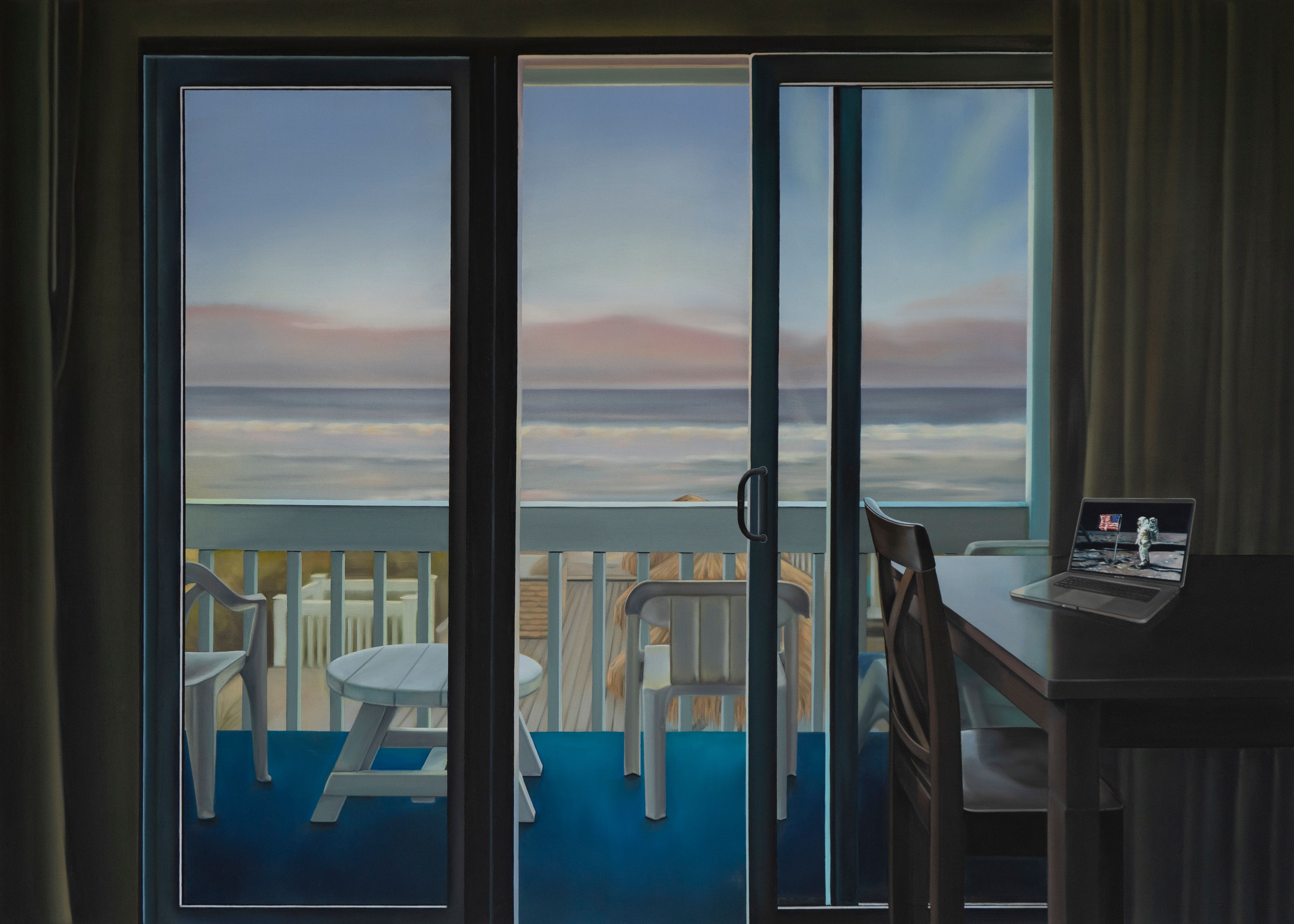
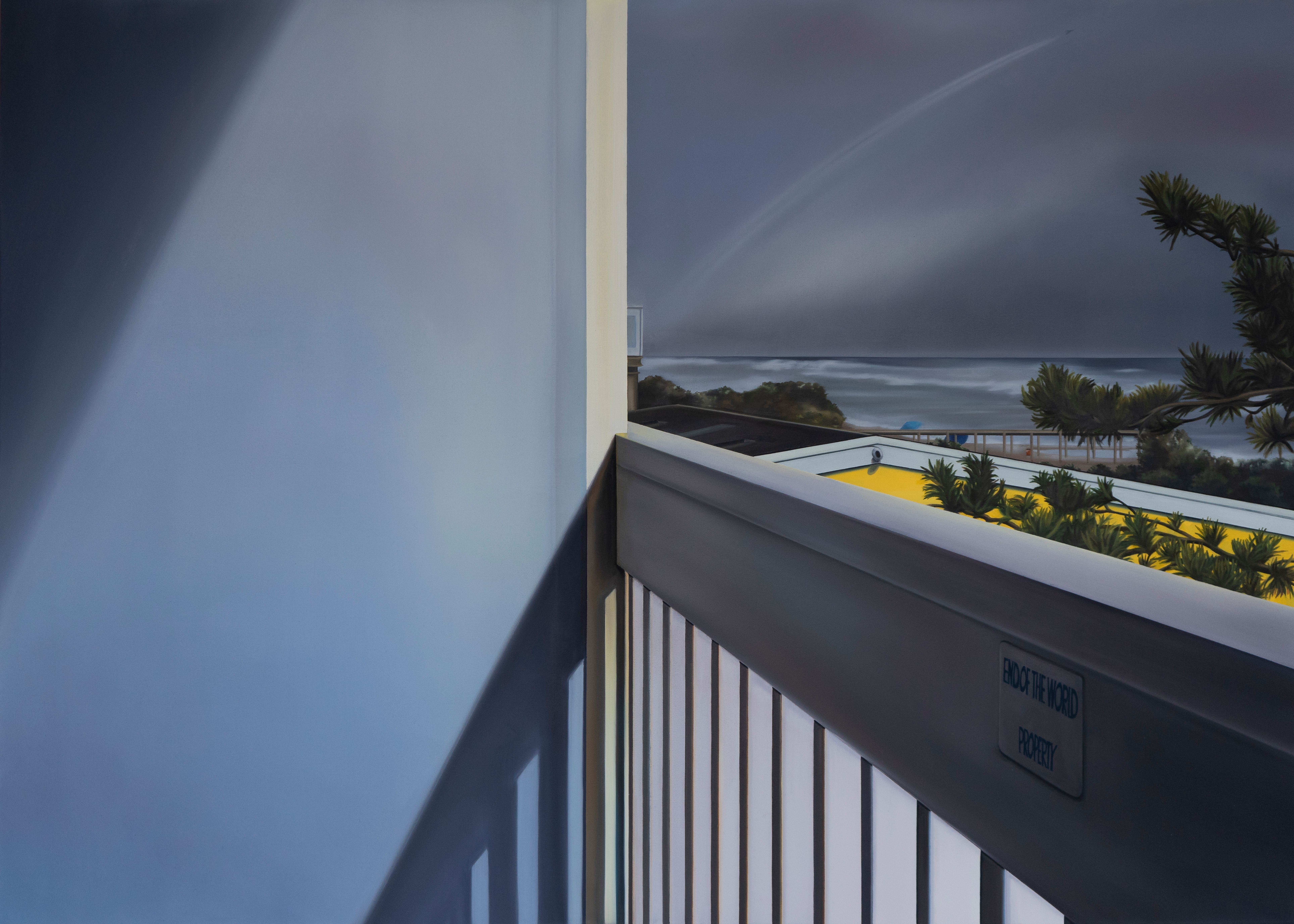
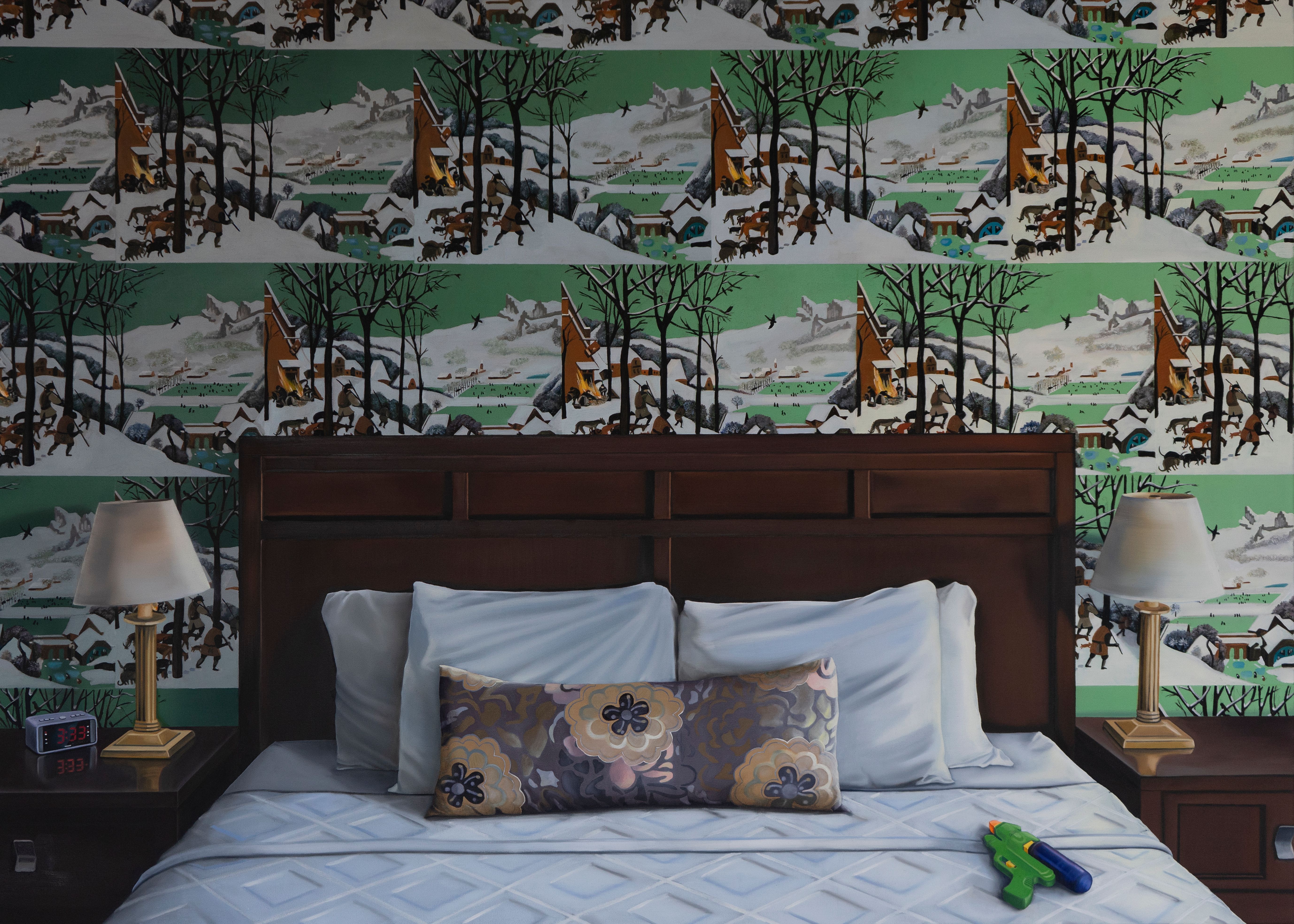
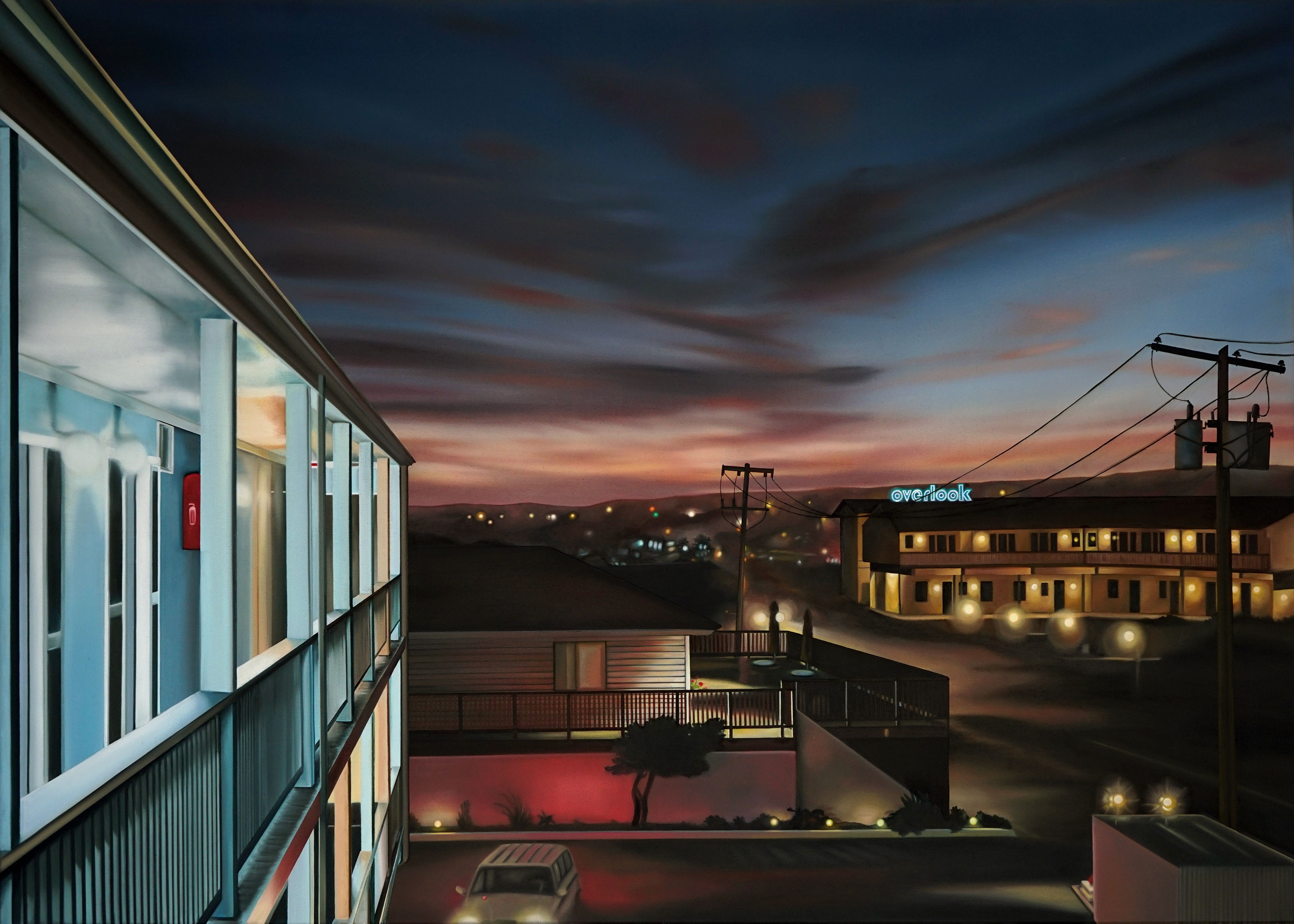
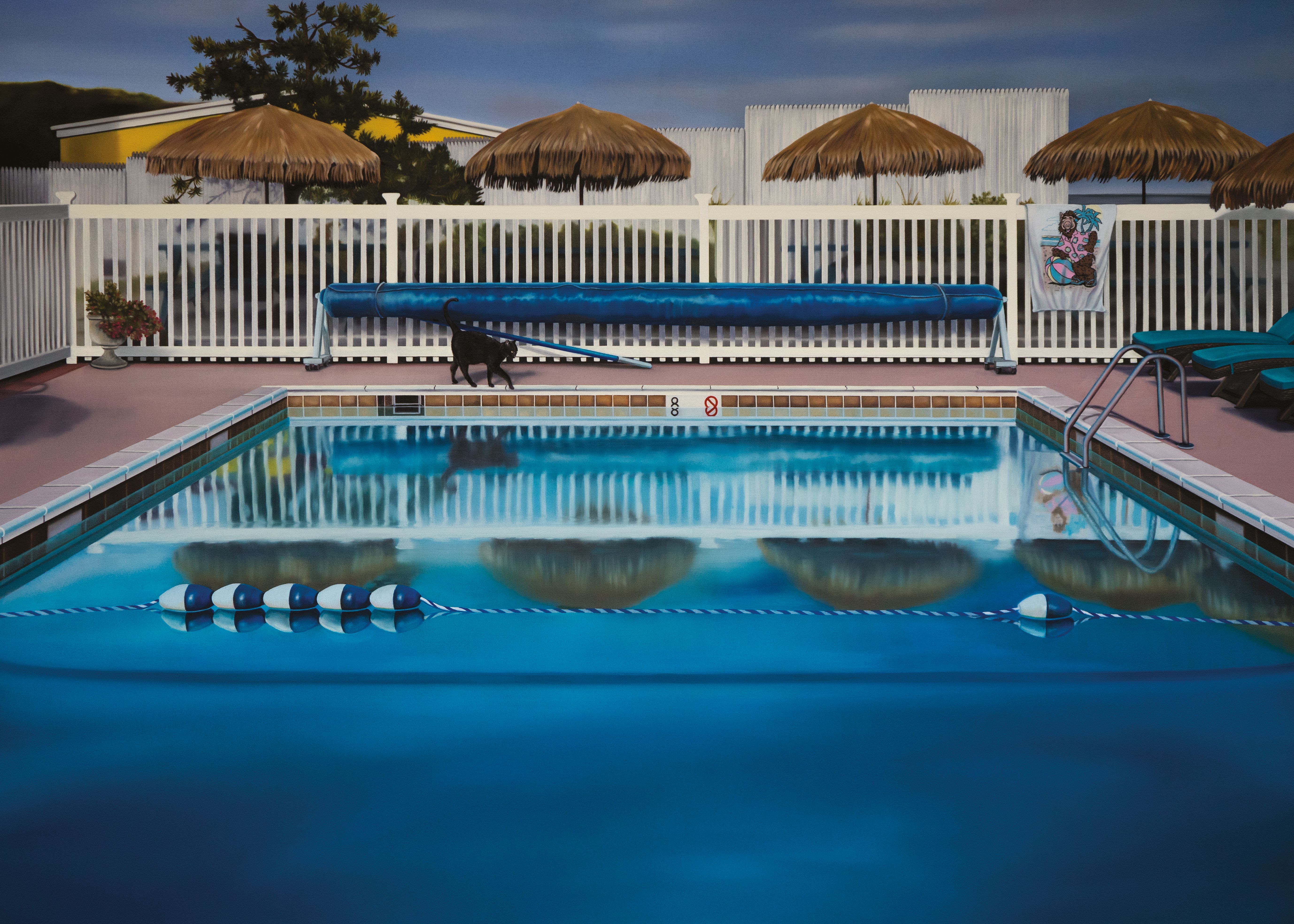
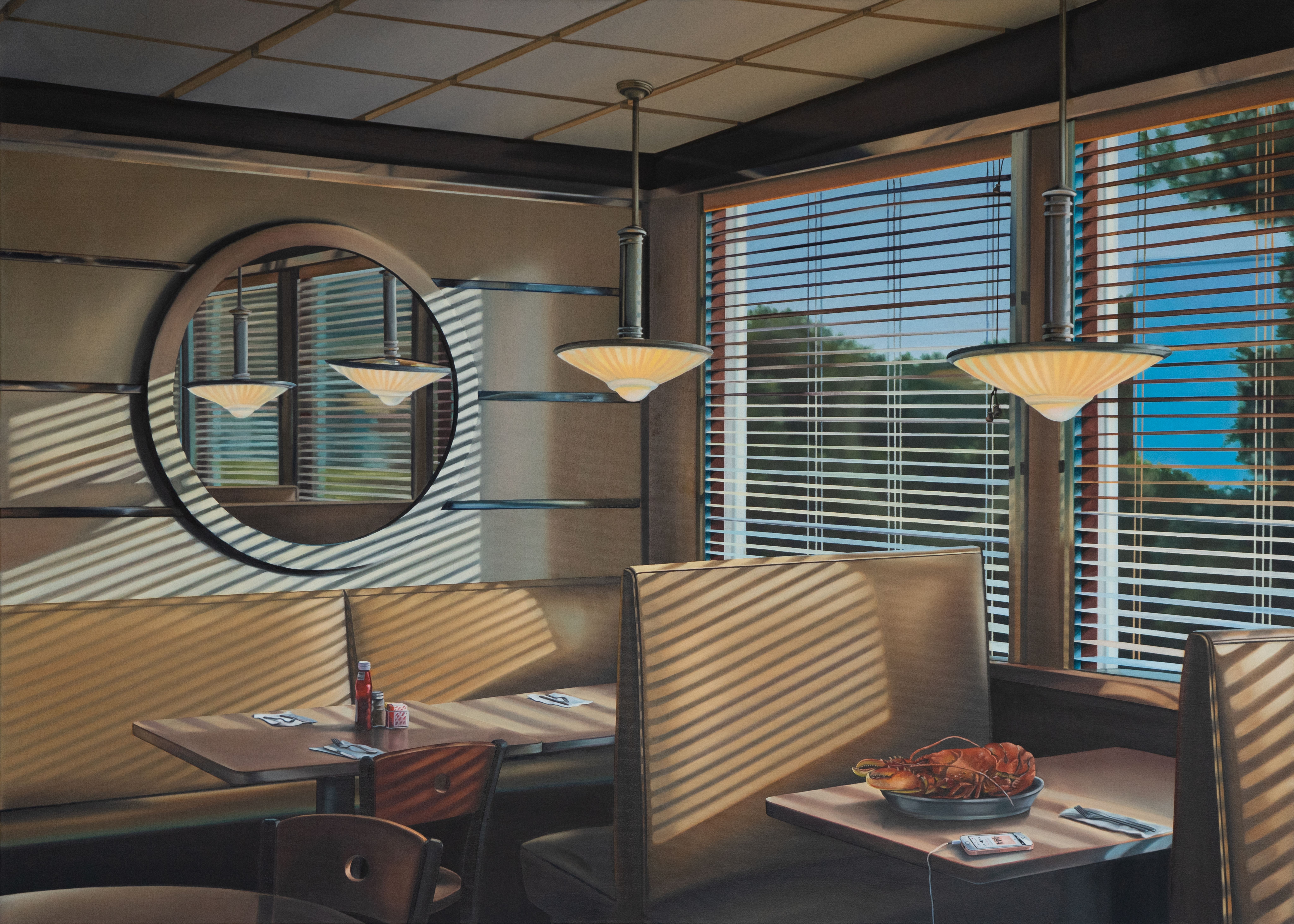
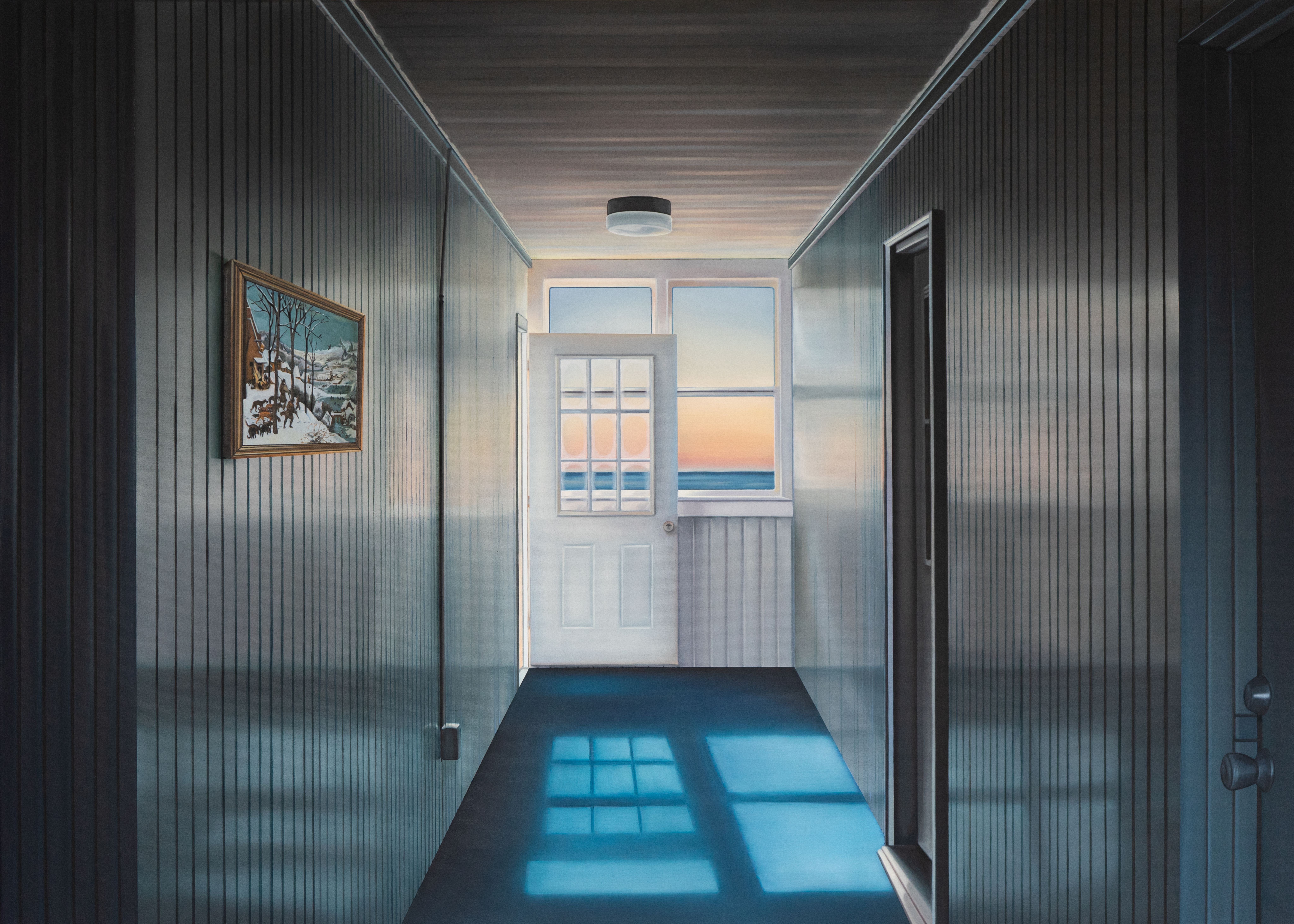
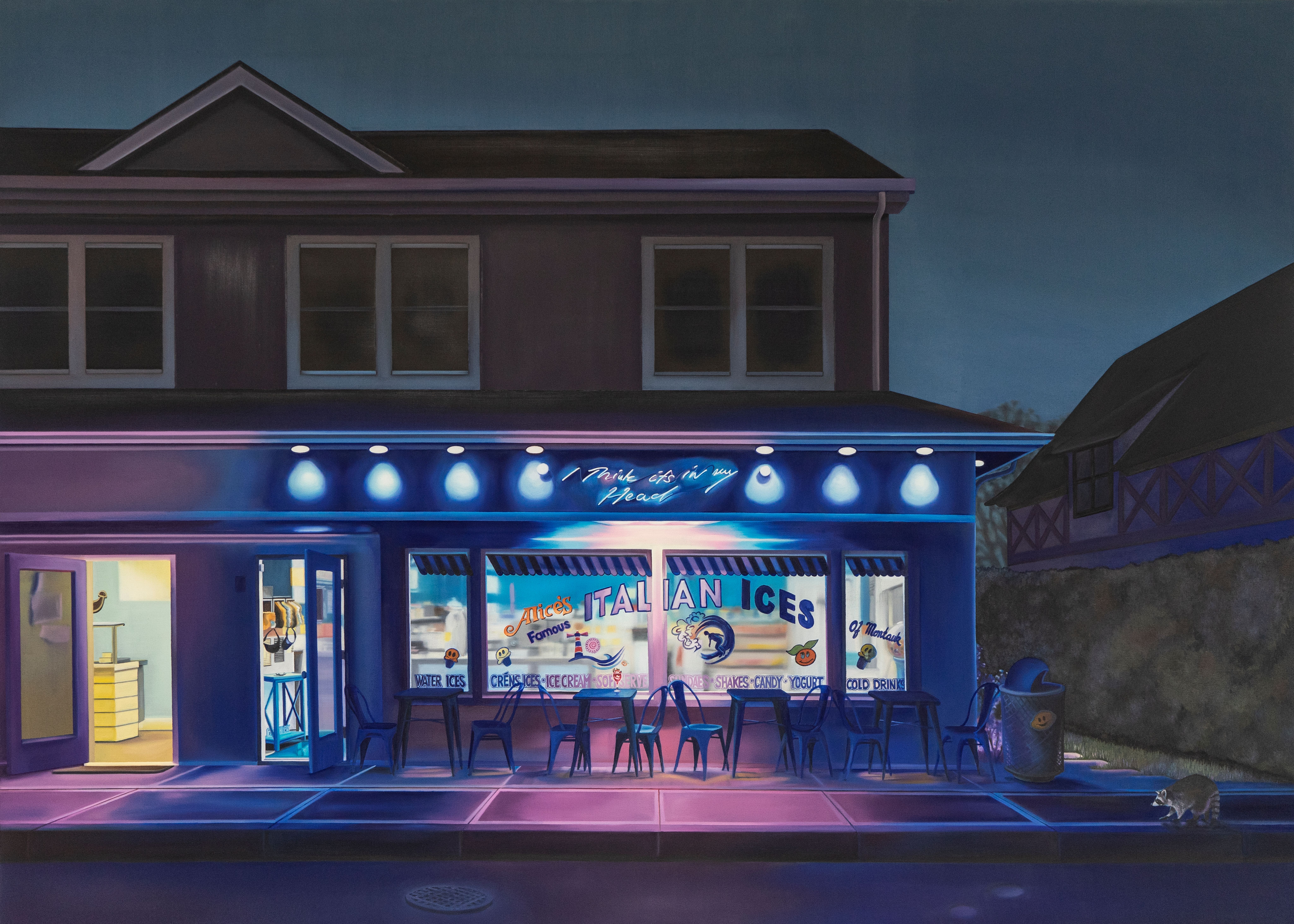
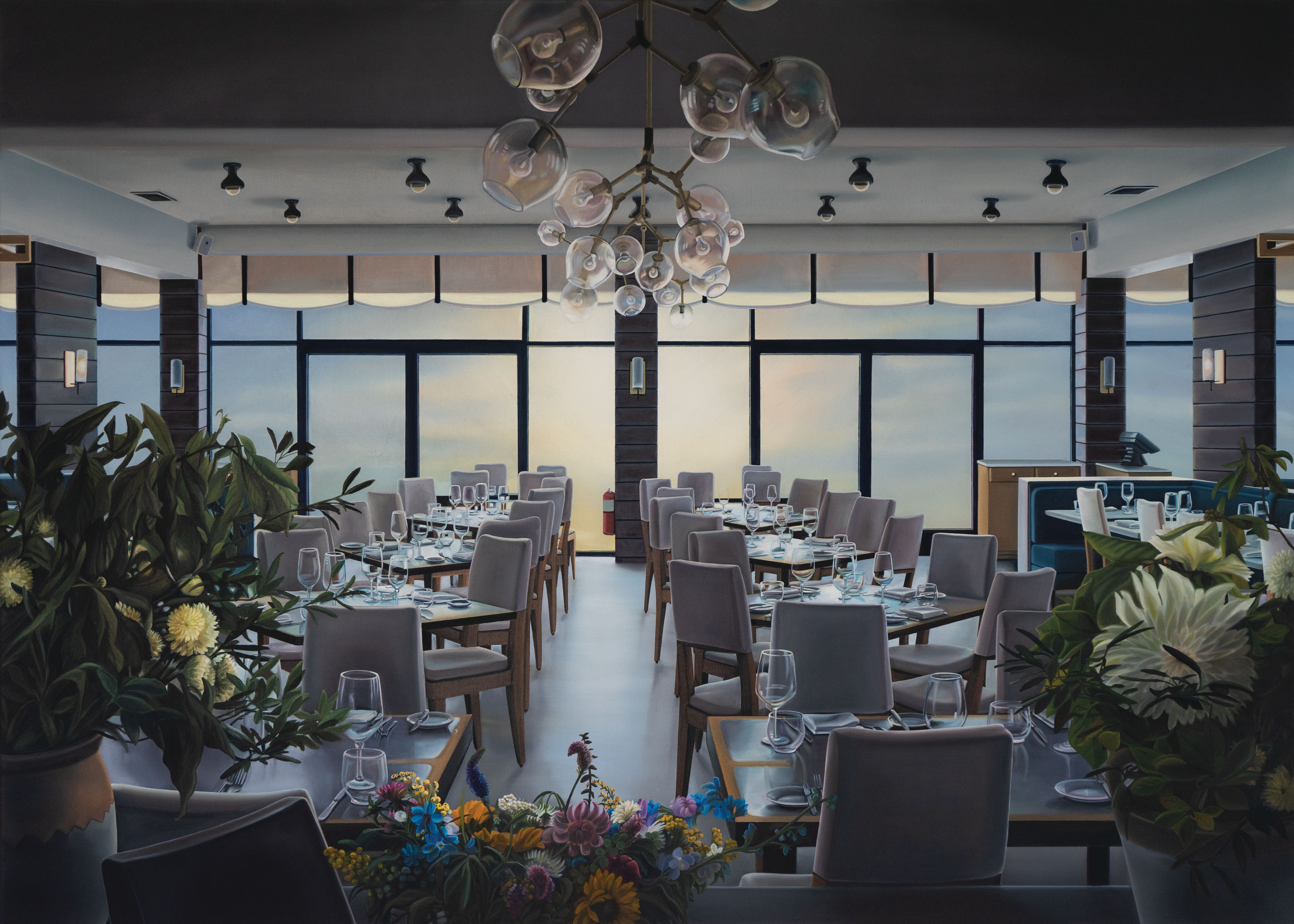
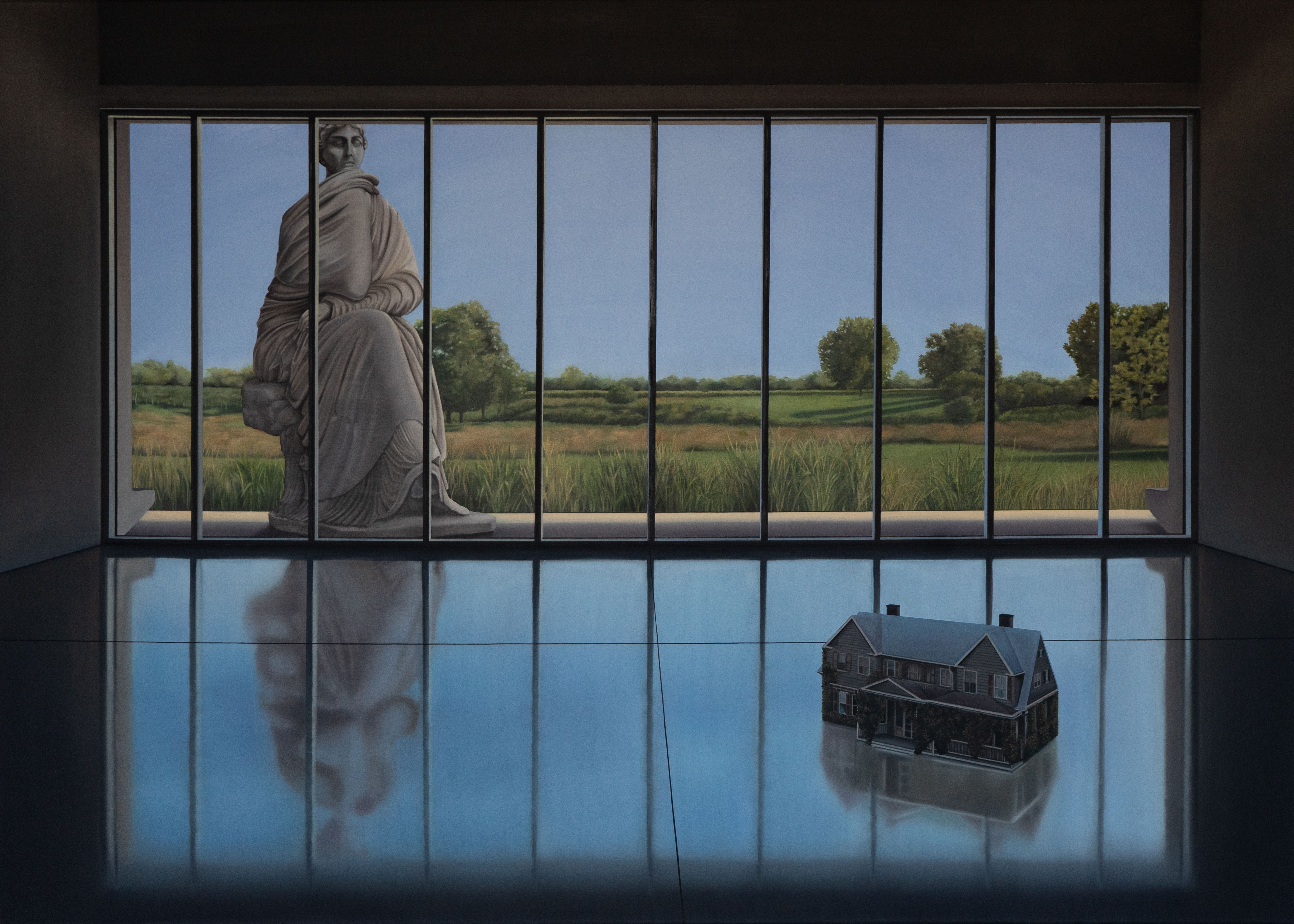
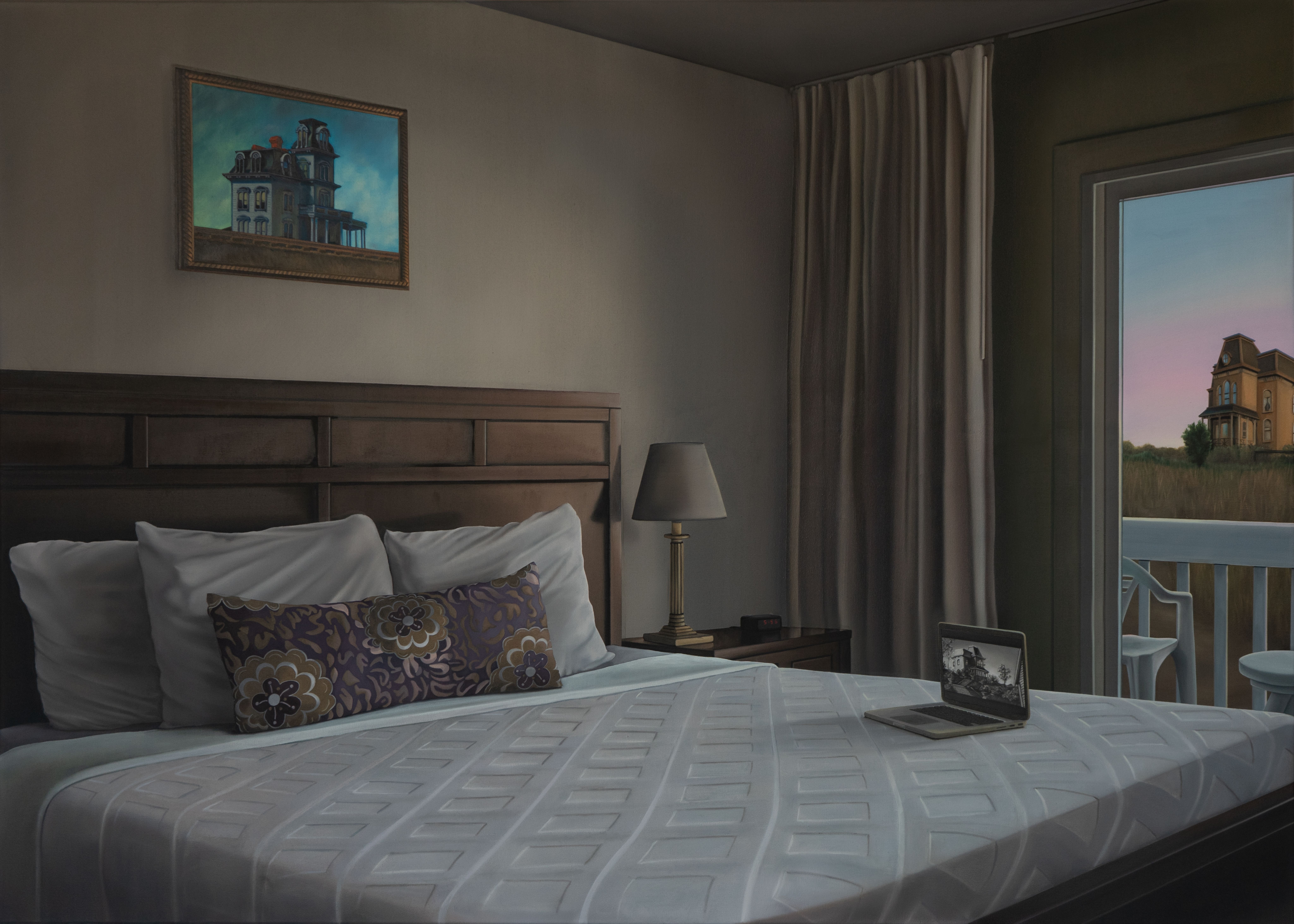
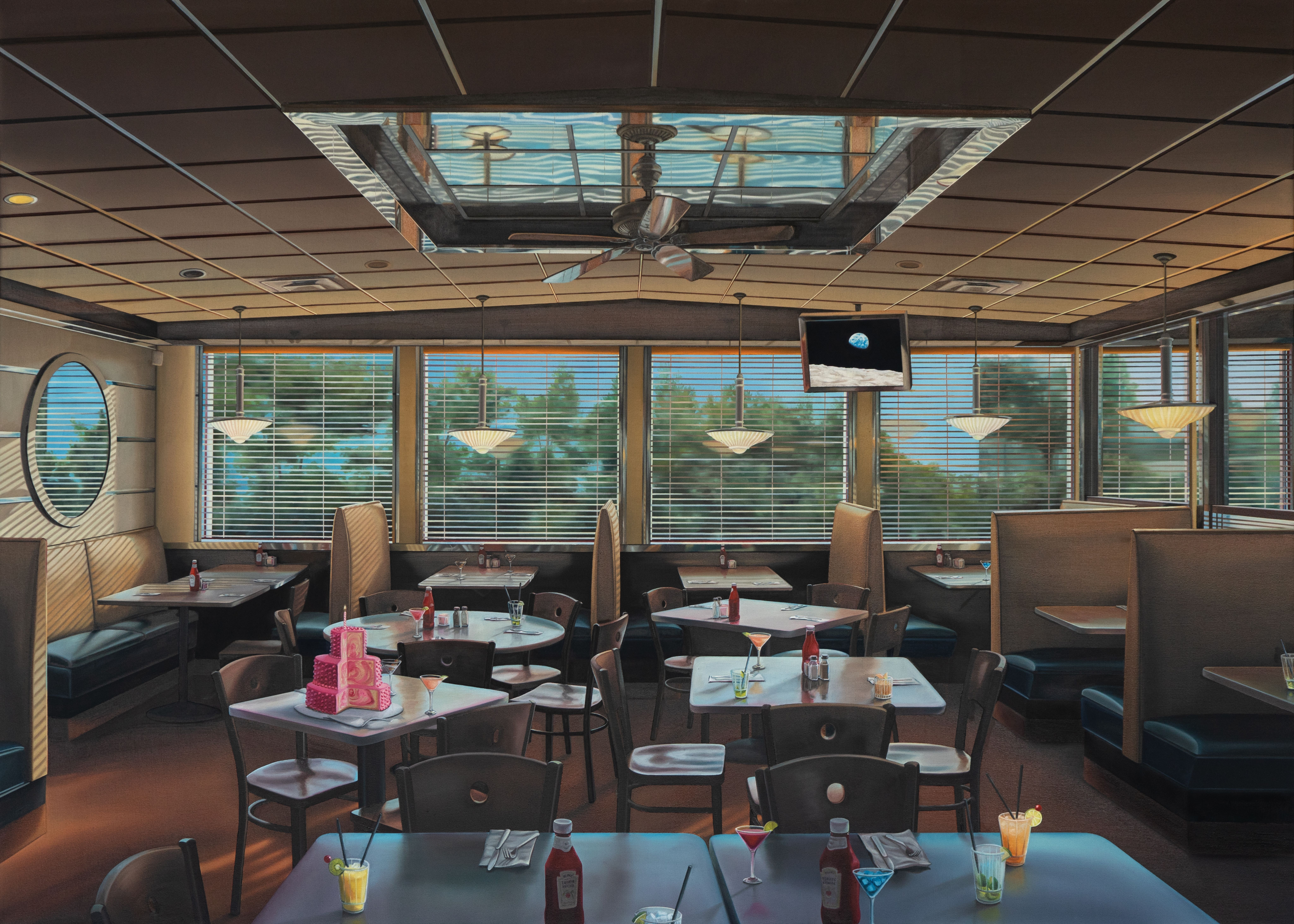
Alina Grasmann’s paintings are fascinating illusions. In her series The Montauk Project, the artist brings together several different references: the American coast; Max Frisch’s novella Montauk, which, like Grasmann’s paintings, exists between fact and fiction; and the conspiracy theory of the same name, which alleges that experiments in mind control were carried out on the American public at a military base in Montauk. The subject matter is uncanny, much like the atmosphere her paintings evoke.
For some time, Grasmann has been interested in the architecture of North America, which often appears like a stage set. It seems familiar—from art and cinema—as though we have seen it countless times before, and yet, from a European perspective, it always retains a certain sense of otherness. Perhaps this impression stems from the apparent impermanence of these buildings. The houses seem unstable, as though they could collapse or be dismantled at any moment. Yet despite the realism of her painterly language, Grasmann is not concerned with representing reality but with developing and enabling ideas.
The artist exploits painting’s capacity to construct and dissolve illusions simultaneously. Whether the depicted places actually exist or not, the resulting paintings present unfamiliar scenes that only initially appear to reproduce reality. The longer we look, the more uncertainties emerge and the more manipulated our perception becomes. What we encounter is not a real place but a place that could exist—a space created between reality and perception, where the two never fully coincide because of the subtle disruptions embedded within the image. Grasmann continuously deceives the viewer: nothing is entirely authentic; everything is carefully constructed. Even seemingly ordinary interiors are unsettled by shadows that fall unnaturally across the space.
Perspective plays a crucial role in these works. The paintings provoke ideas and unsettle perception, as though we were looking through our own eyes while simultaneously doubting what we see. The familiar uncanny has become one of Grasmann’s central subjects. Her paintings are meticulously constructed impossibilities in which the real and the unreal overlap and coexist. The unspoken potential of the depicted places captivates the viewer, while the act of looking itself remains fundamentally destabilised.
Text by Anja Lückenkemper, originally published for the exhibition The First Years of Professionalism 39, Galerie der Künstler, Munich, 5–24 May 2020