The Grand Buffet
The artist Alina Grasmann is throwing a party. Not to celebrate her birthday but in honour of Haus Schminke, an icon of organic architecture and a favourite of its architect Hans Scharoun. While classical modernist buildings in Long Island and Connecticut are being torn down to make way for tennis courts, Grasmann is inviting audiences to her party and opening The Grand Buffet.
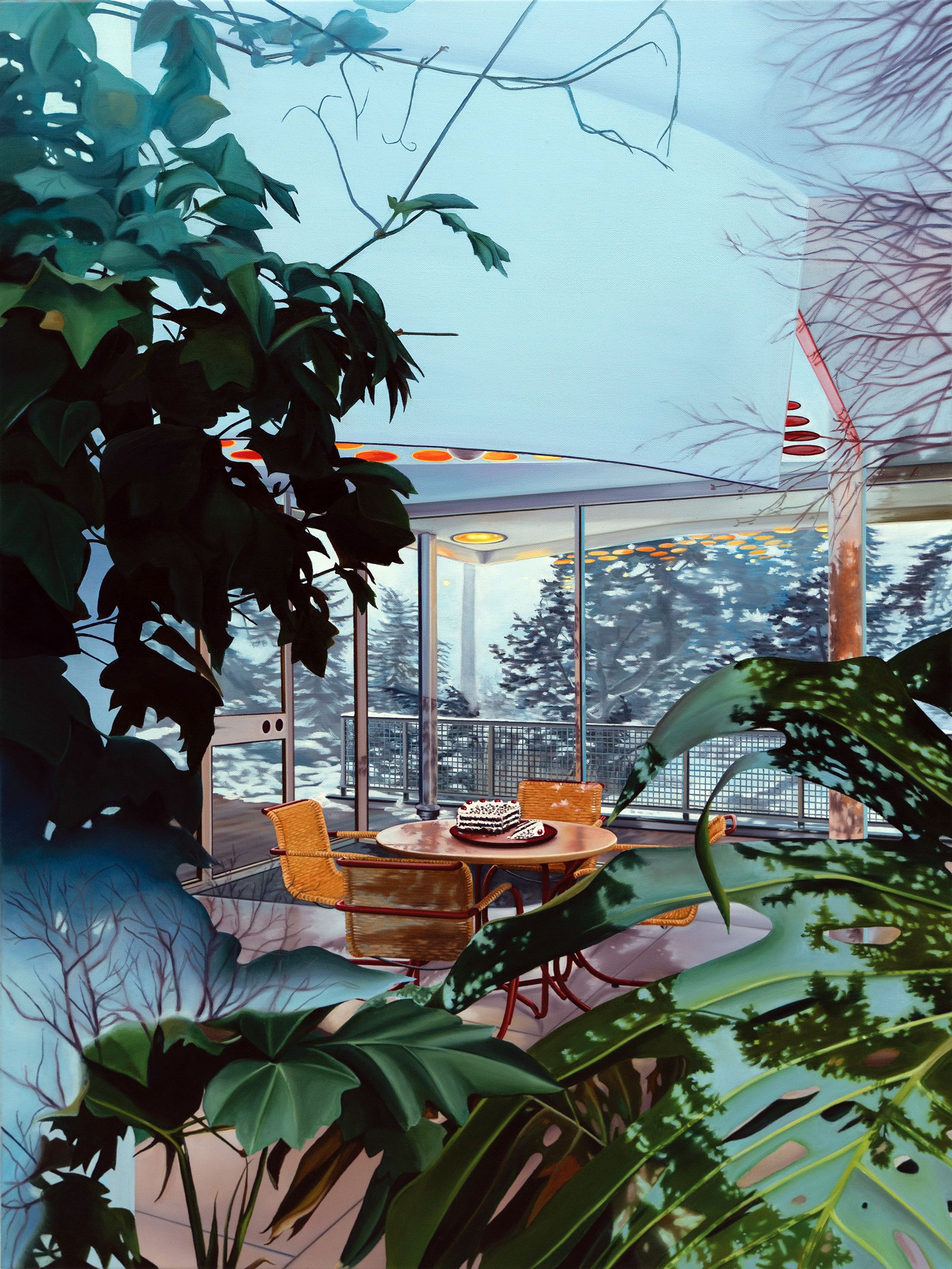
Haus Schminke was built in 1930 as the home of the noodles manufacturer Fritz Schminke in the small city of Löbau in Saxony. The owners wished for it to be a “modern home for two parents, four children and occasionally one or two guests.” In reality it turned out to be one of the most important examples of classical modernism in Germany and now becomes the stage for Alina Grasmann’s multi-layered ode to joy. In The Grand Buffet, as in her earlier work, the Munich artist uses real locations as the settings for her paintings, creating space within them for new mythologies. For the first time, the place she has chosen is in Germany, while most recently she has focussed on the USA, where myths and icons are subject to constant (re)production like nowhere else. In The Grand Buffet she places the Schminke family’s personal experiences, collective memories and the symbols of a zeitgeist on top of each other, like the layers of a Black Forest gateau, and adds her own family rituals as the cherry on top of the cake.
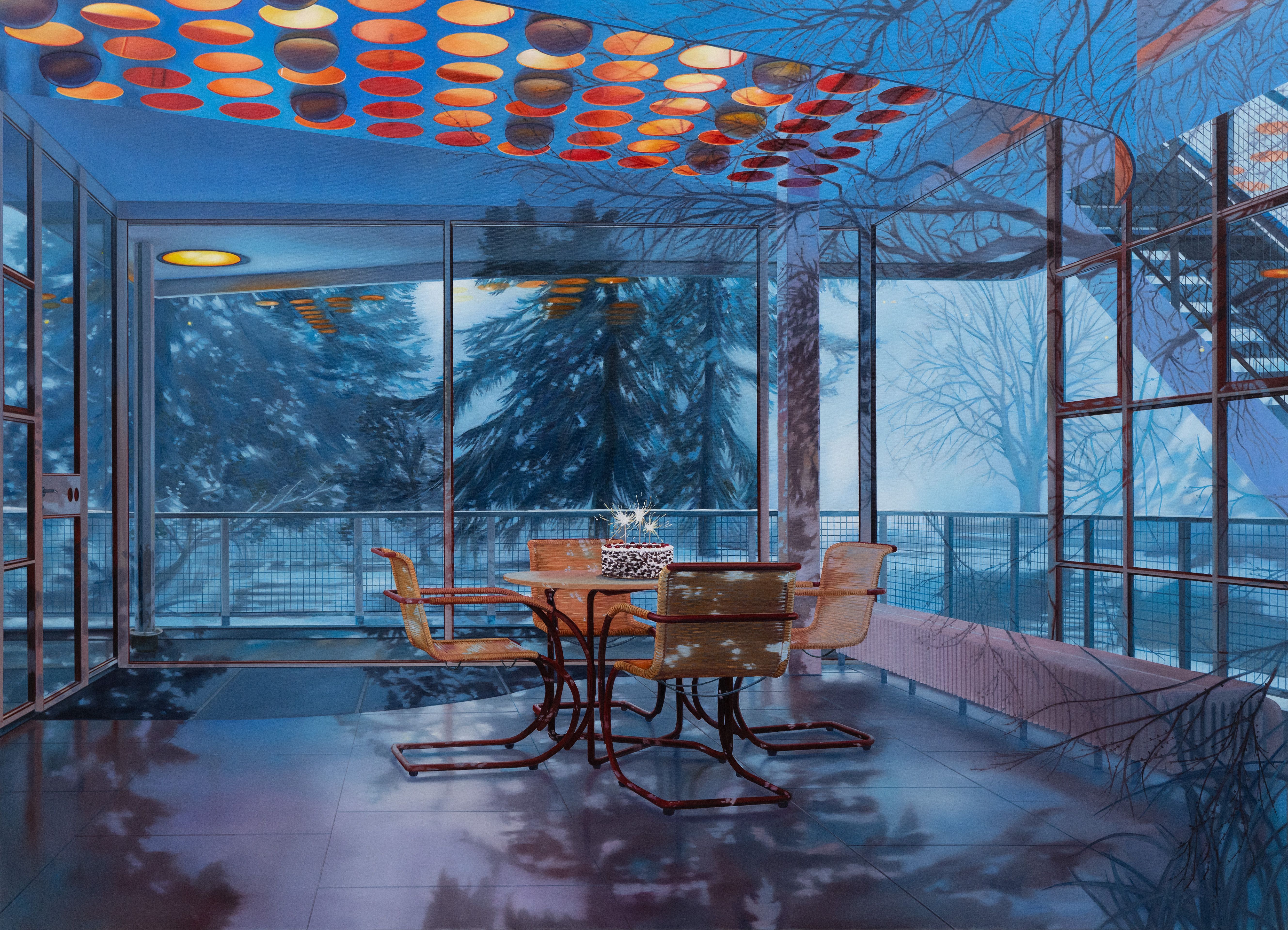
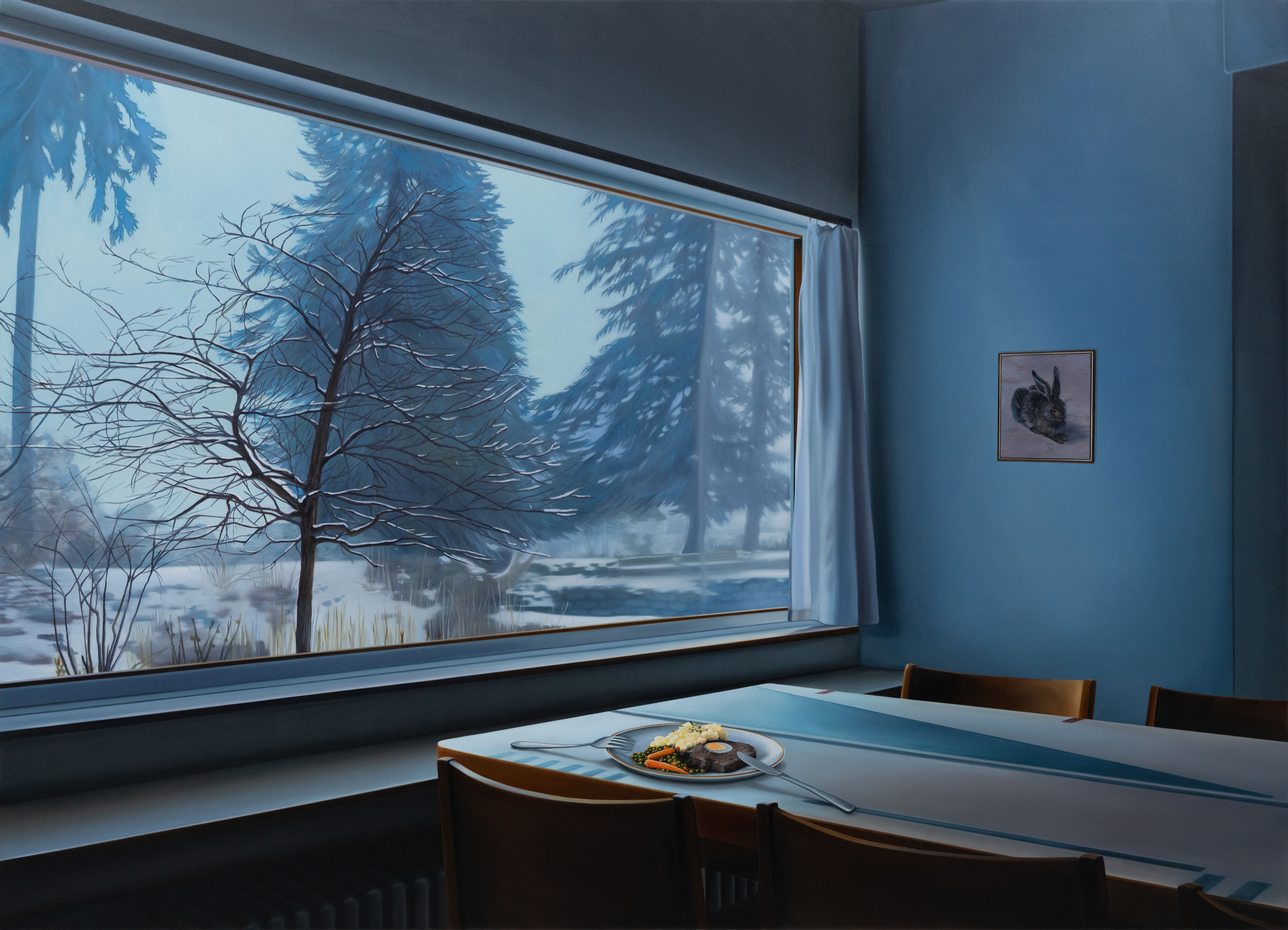
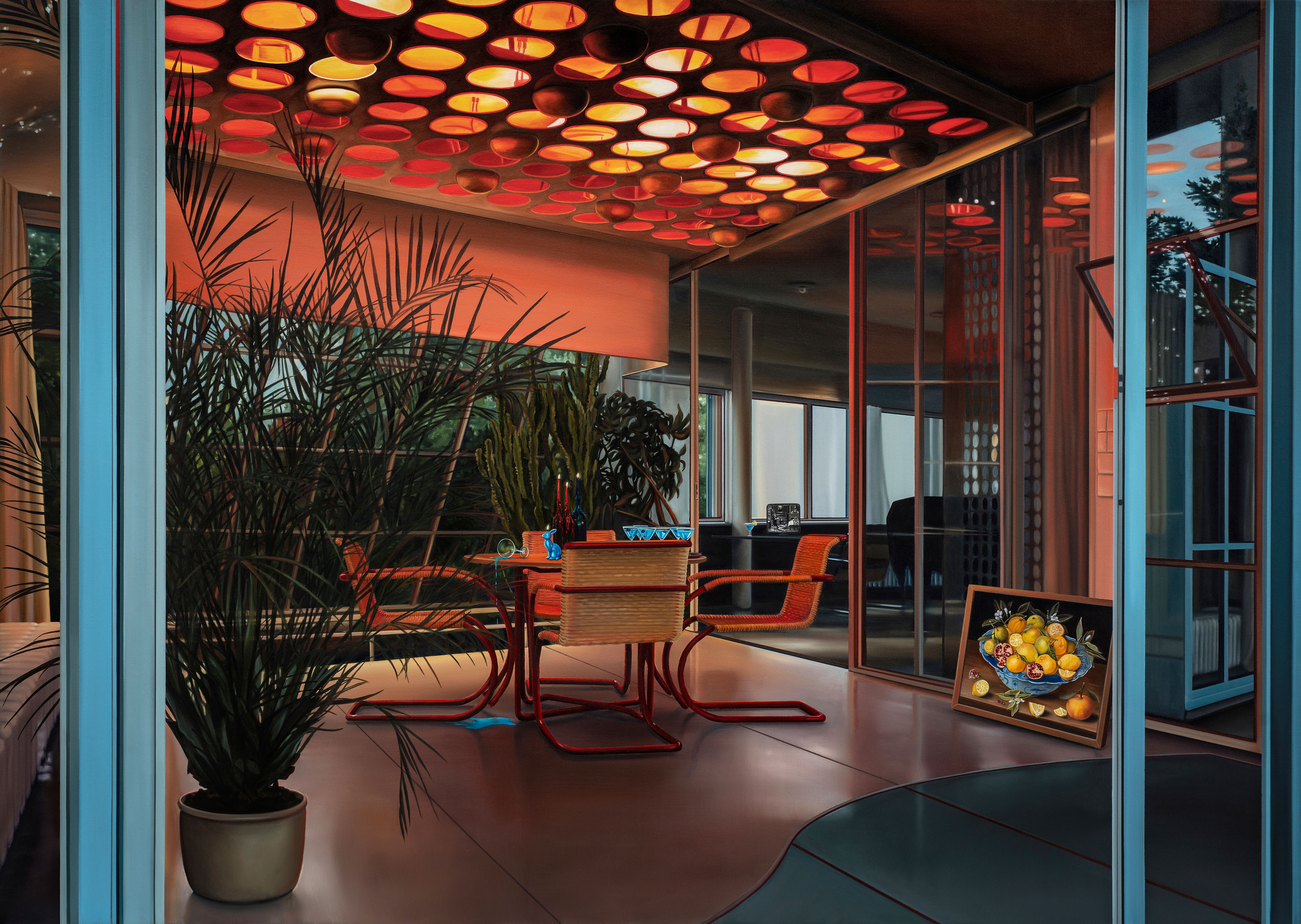
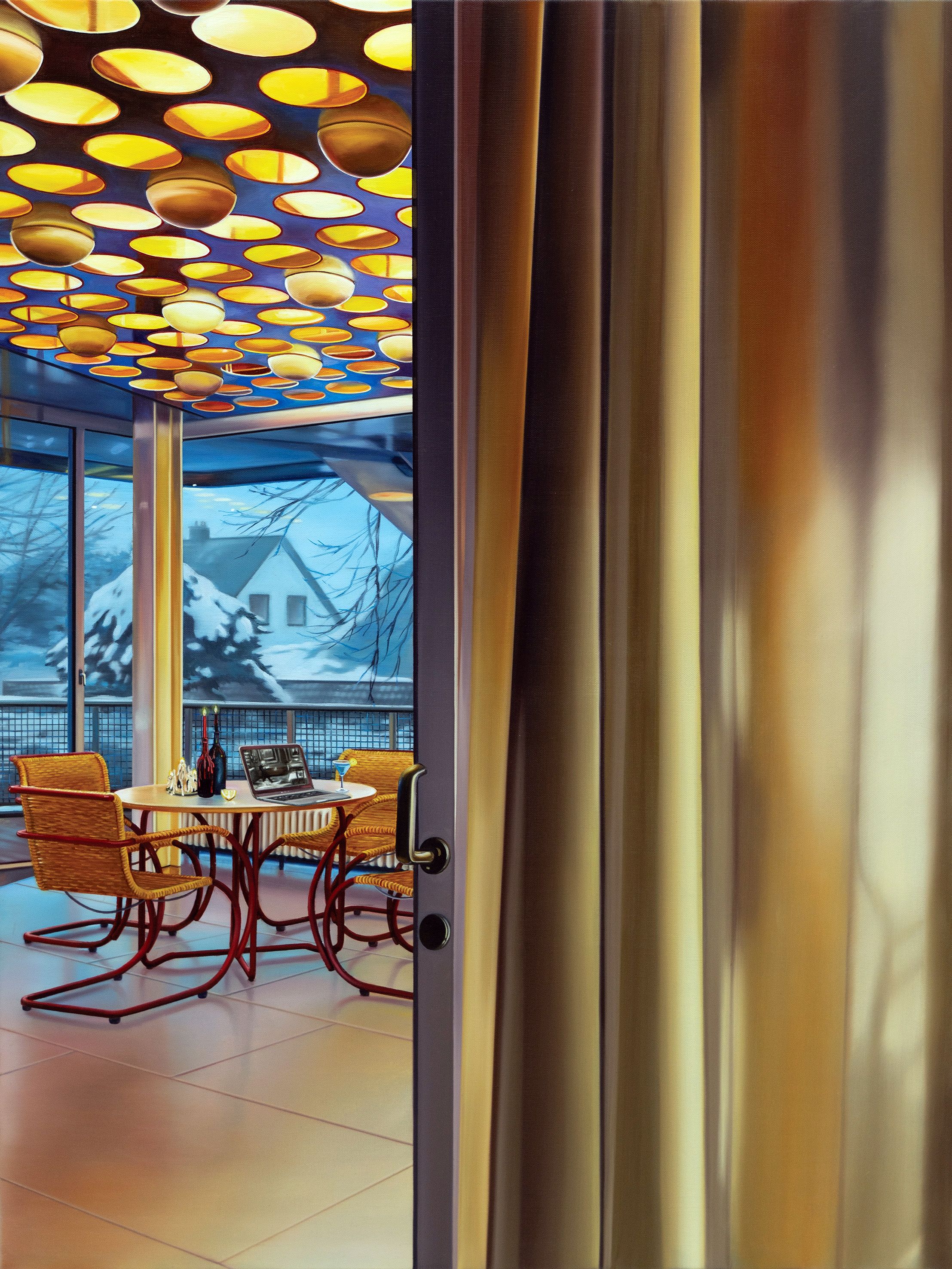
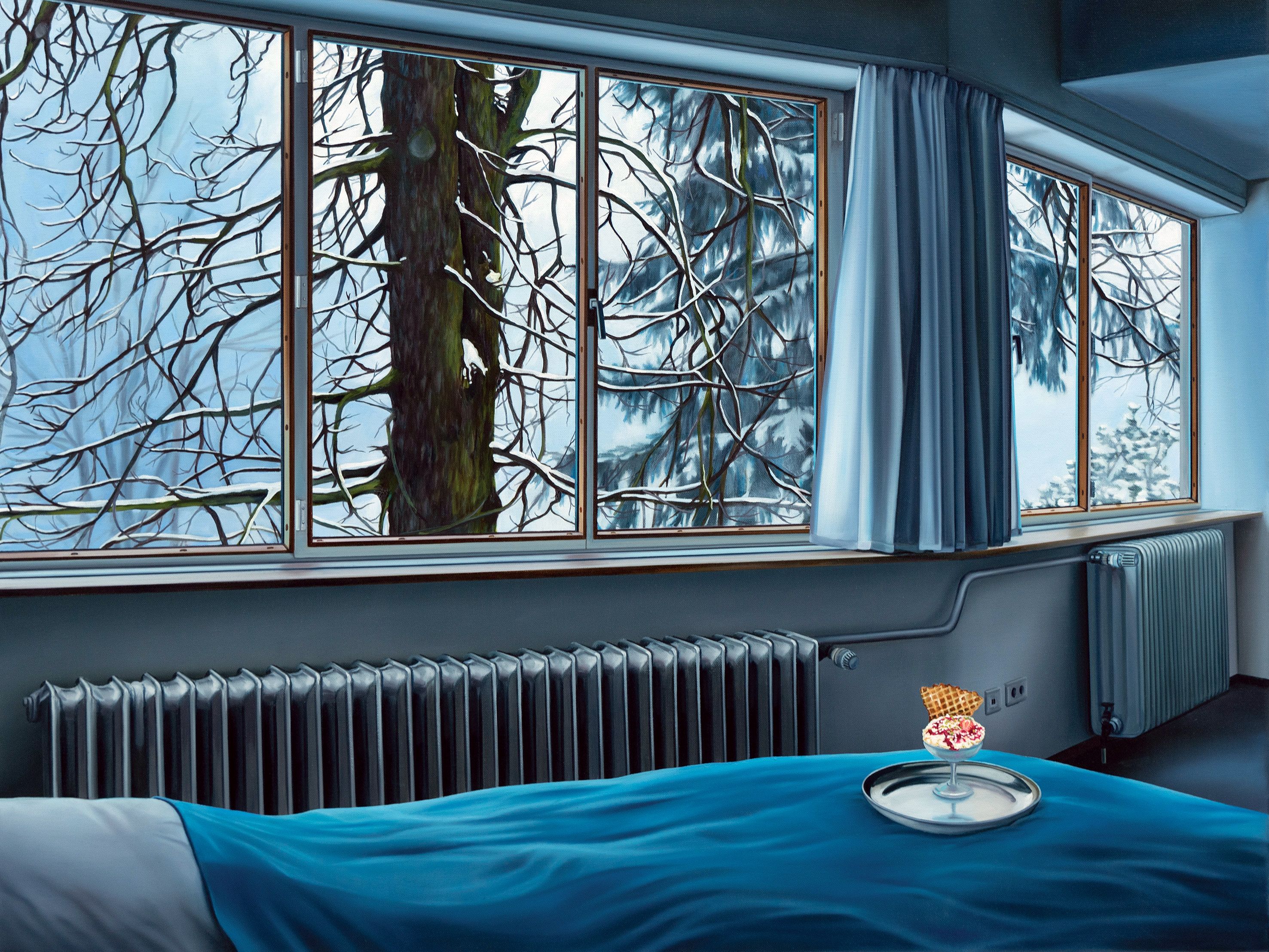
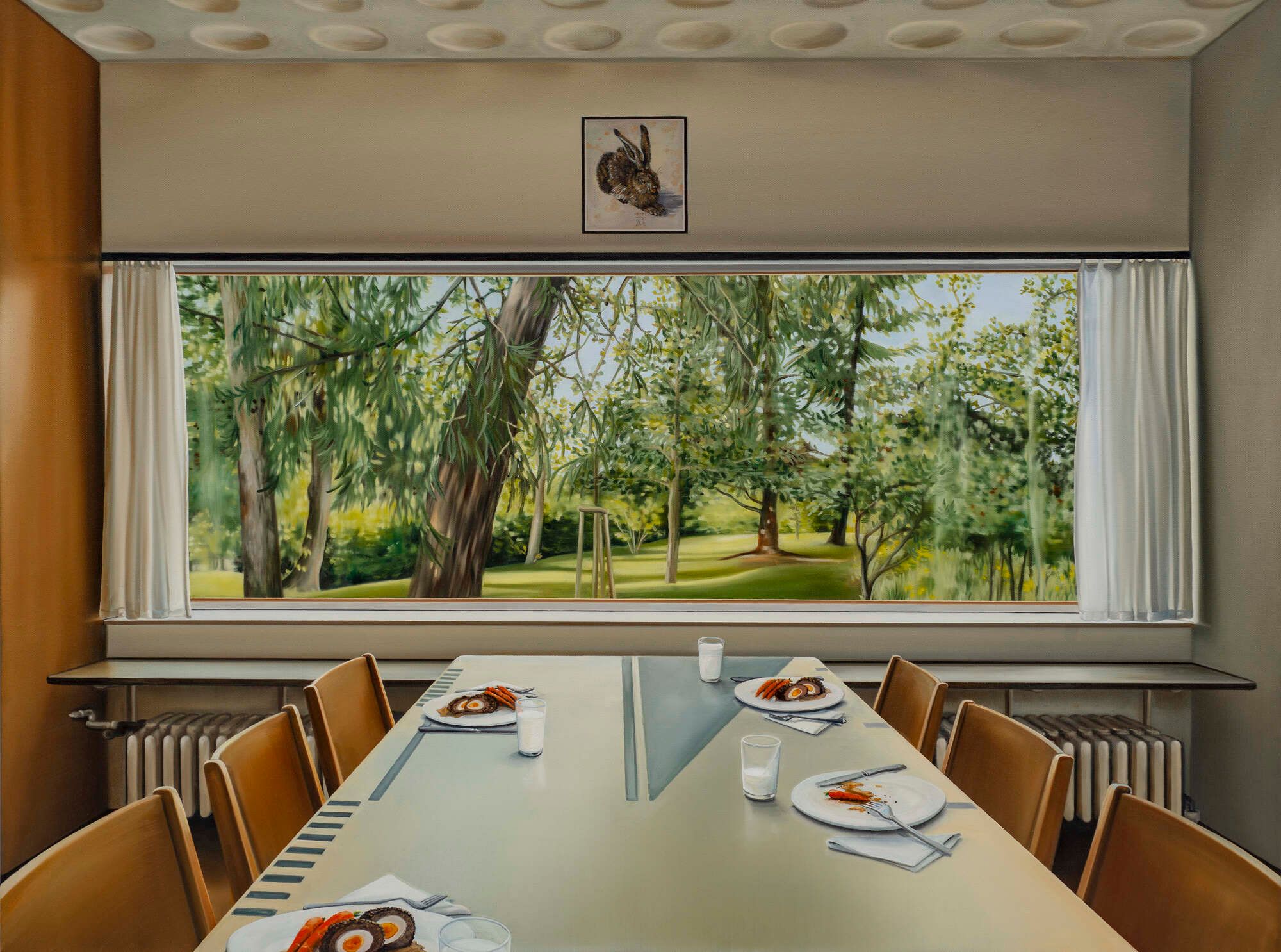
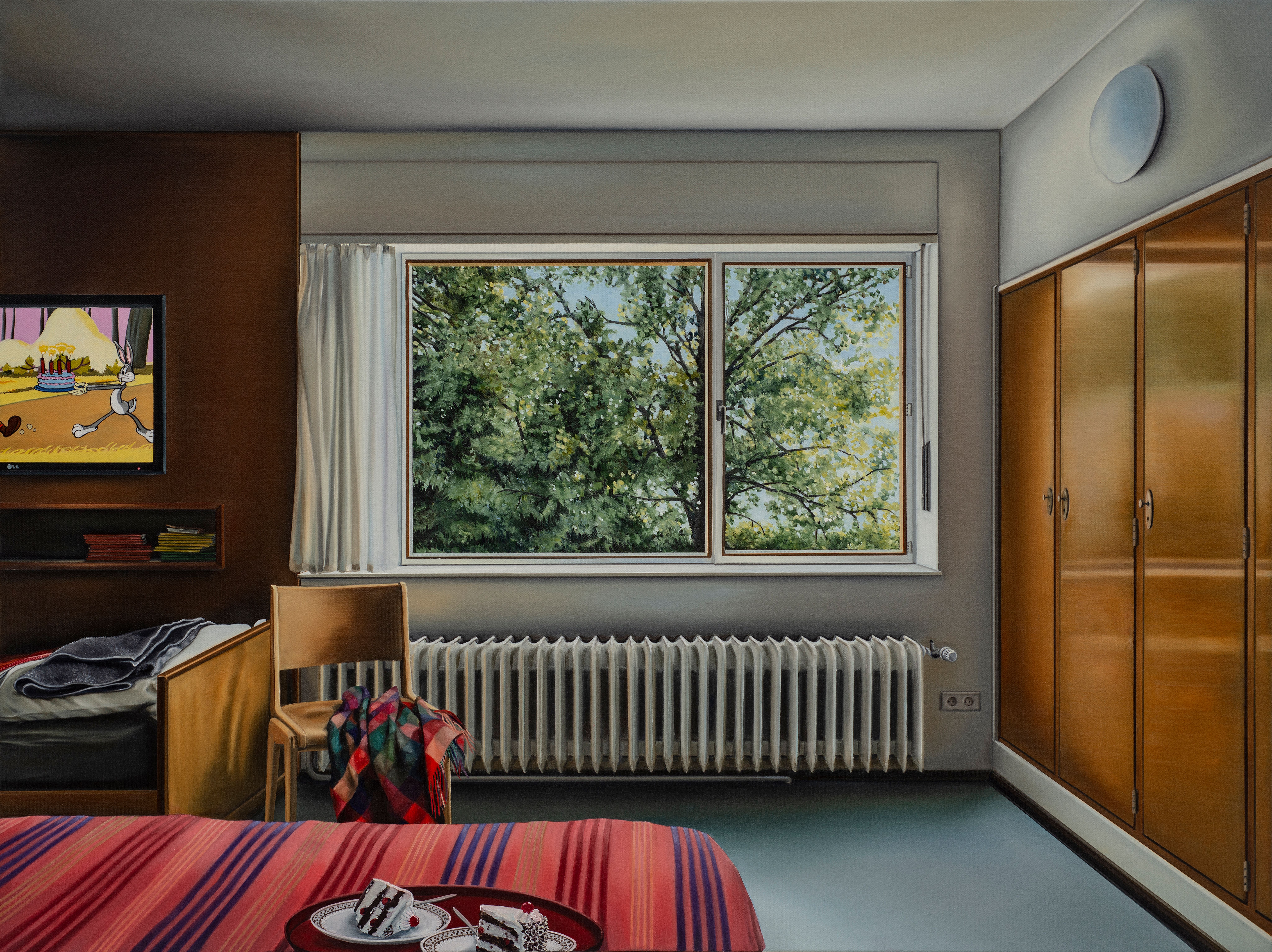
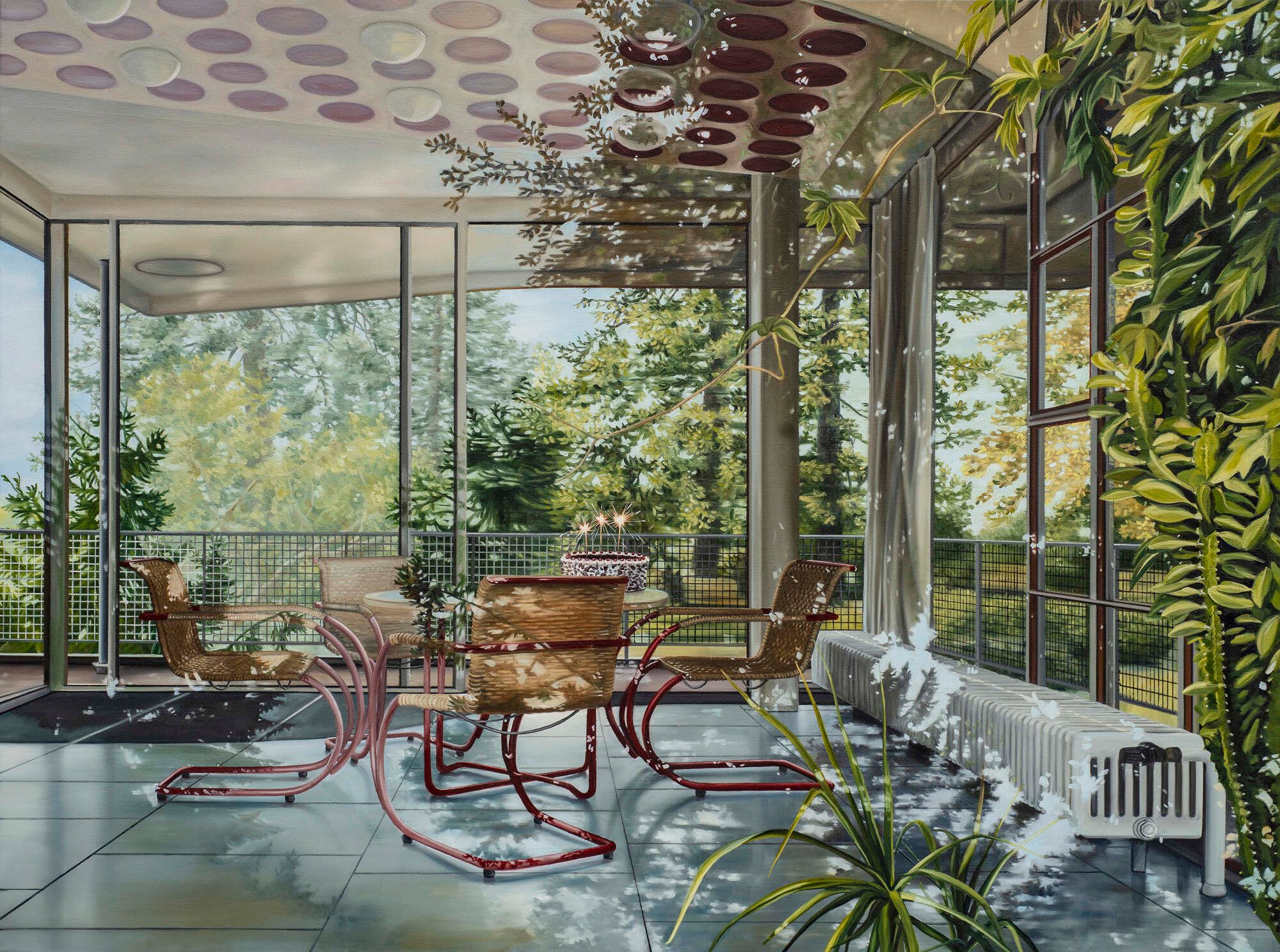
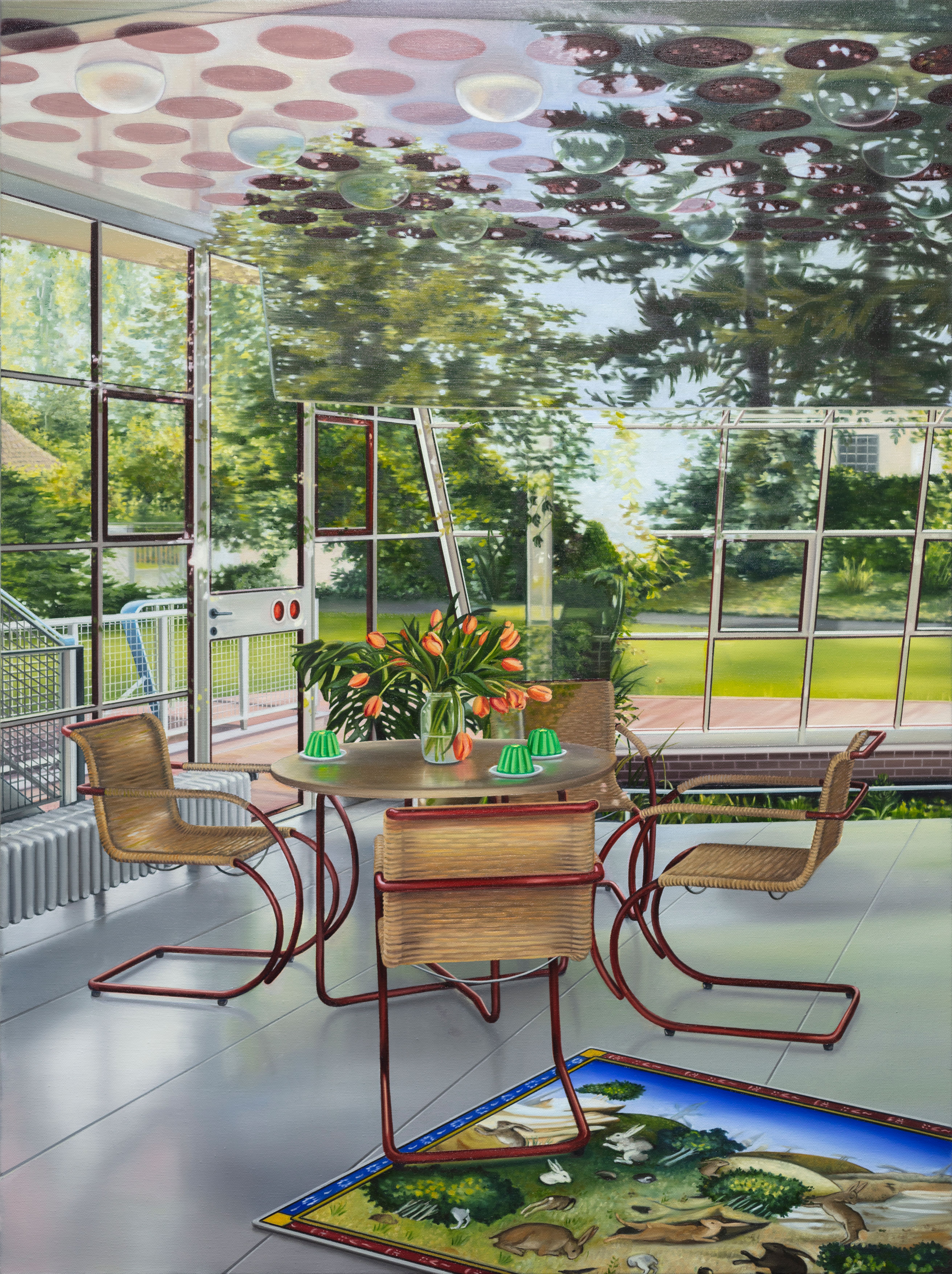
Grasmann’s buffet is lavishly decked out: on the Schminkes’ dining table Falscher Hase (mock rabbit) is served to mark the occasion, a middle-class classic that, as the name suggests, is a deceptive dish. It is not made from rabbit but from minced meat with boiled eggs hidden inside as a little surprise. Someone has already cleaned their plate under the watchful eye of Dürer’s Young Hare and may already be on their way to nibble on a piece of cake in bed—or is watching the sparklers and sunbeams twinkling in the winter garden. With your mouth watering, you can already anticipate the next course. There is fish—befitting of the high seas—on board Schminke’s “noodle steamer,” as the house was once christened because of its maritime elements. In the house, you can look out into the open through its many portholes or hang over the railings on deck right outside the master bedroom.
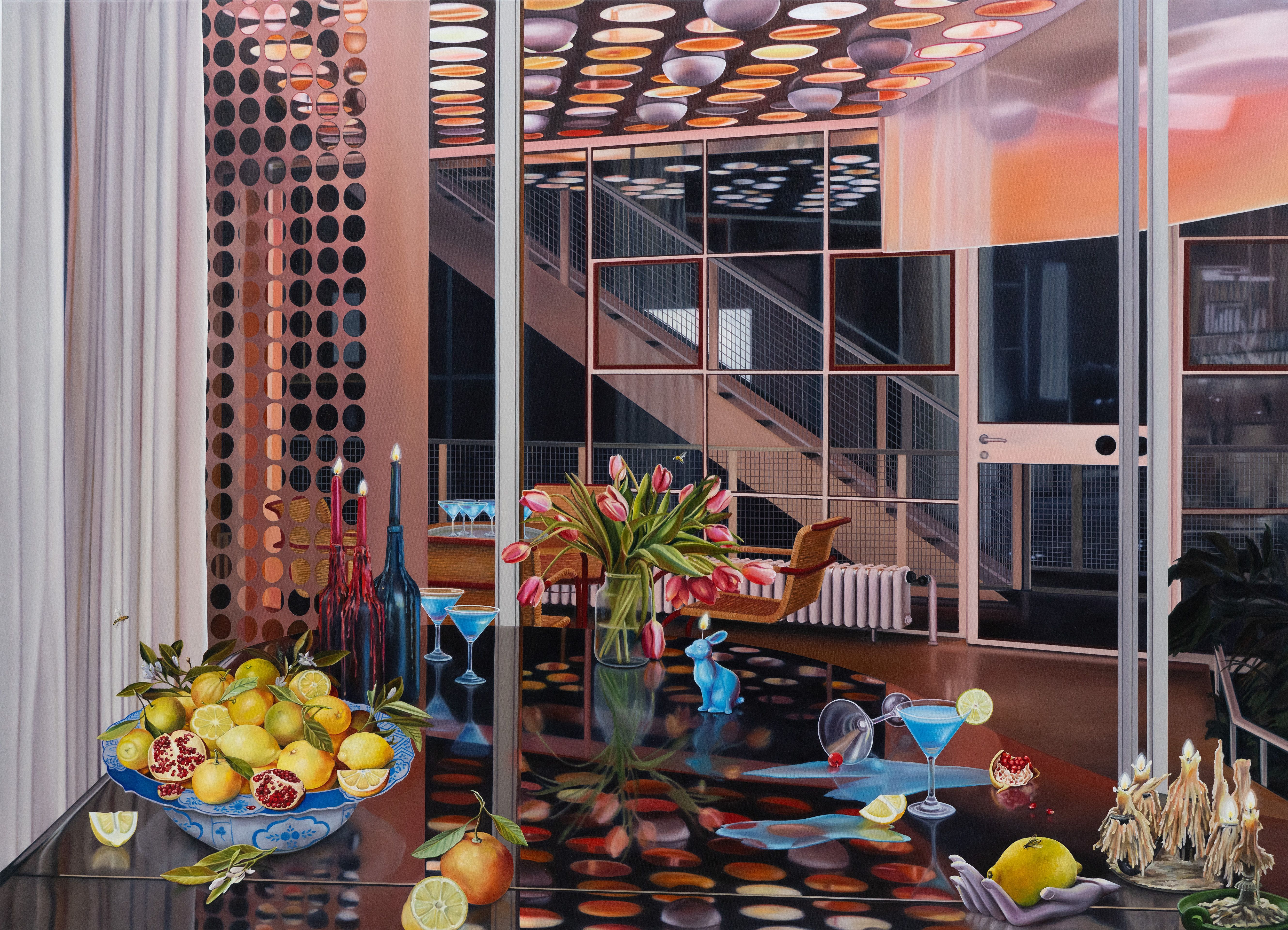
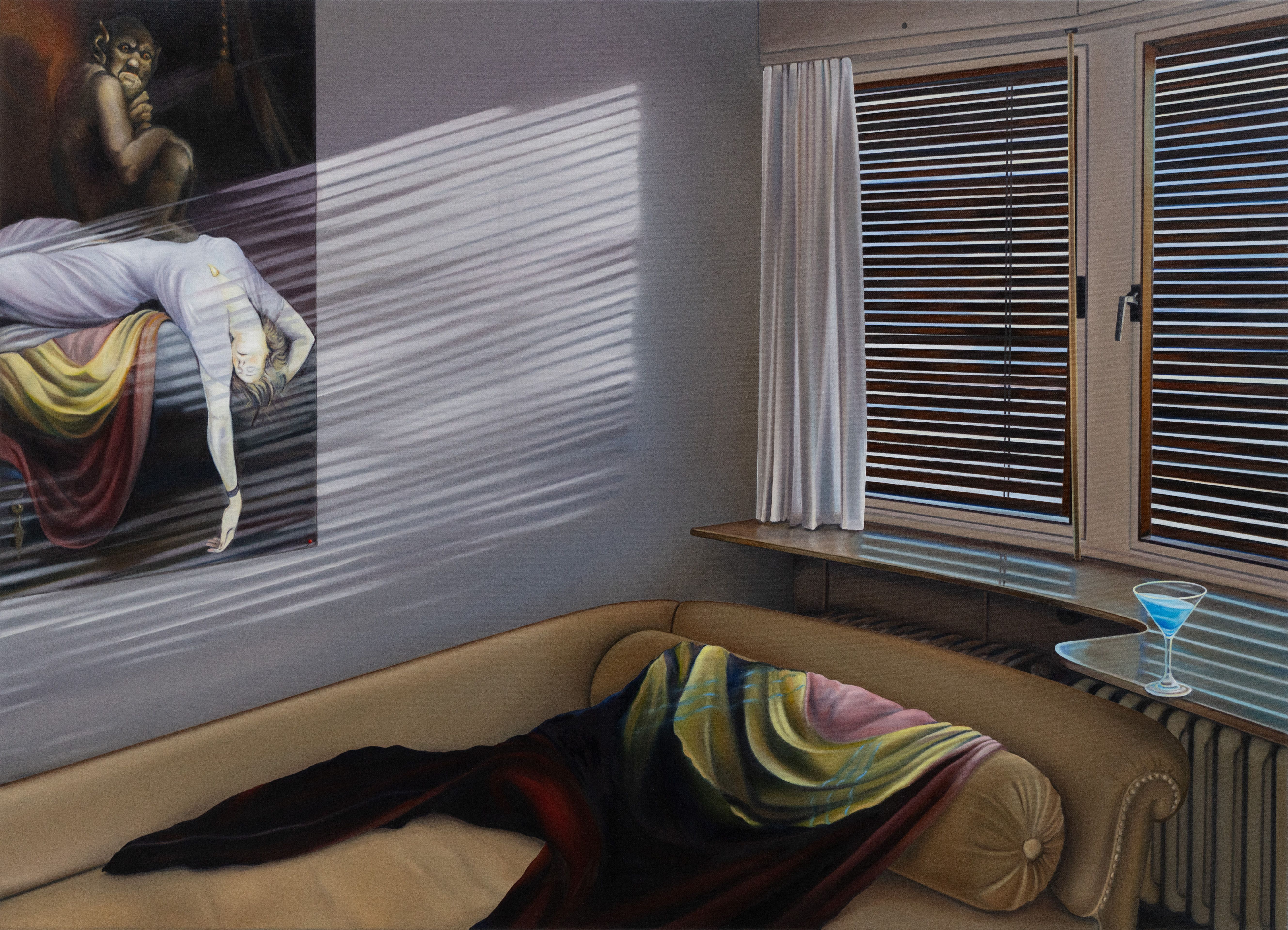
The Grand Buffet is a multi-layered still life. In the exuberant Carpe Diem, which initially dominates the other works, there is already a memento mori. The portrait of John the Baptist is another reference: the lemon in his hand is not only a slice floating in the party guests’ cocktail glasses but also symbolises the bitter fate awaiting the Son of God. Amid quotations from the Old Masters and references to Marco Ferreri’s cinematic masterpiece La Grande Bouffe, Alina Grasmann produces a vacuum filled with coincidences. She creates scenes in which nobody appears and that, at the same time, seem strangely alive. She depicts Haus Schminke in a state of unadulterated joy, where the light, warmth and bright colours of the garden stream into the interior of the house through a glass membrane. At the same time, she is aware that this fragile happiness will end far too soon and the threat is left to resonate.
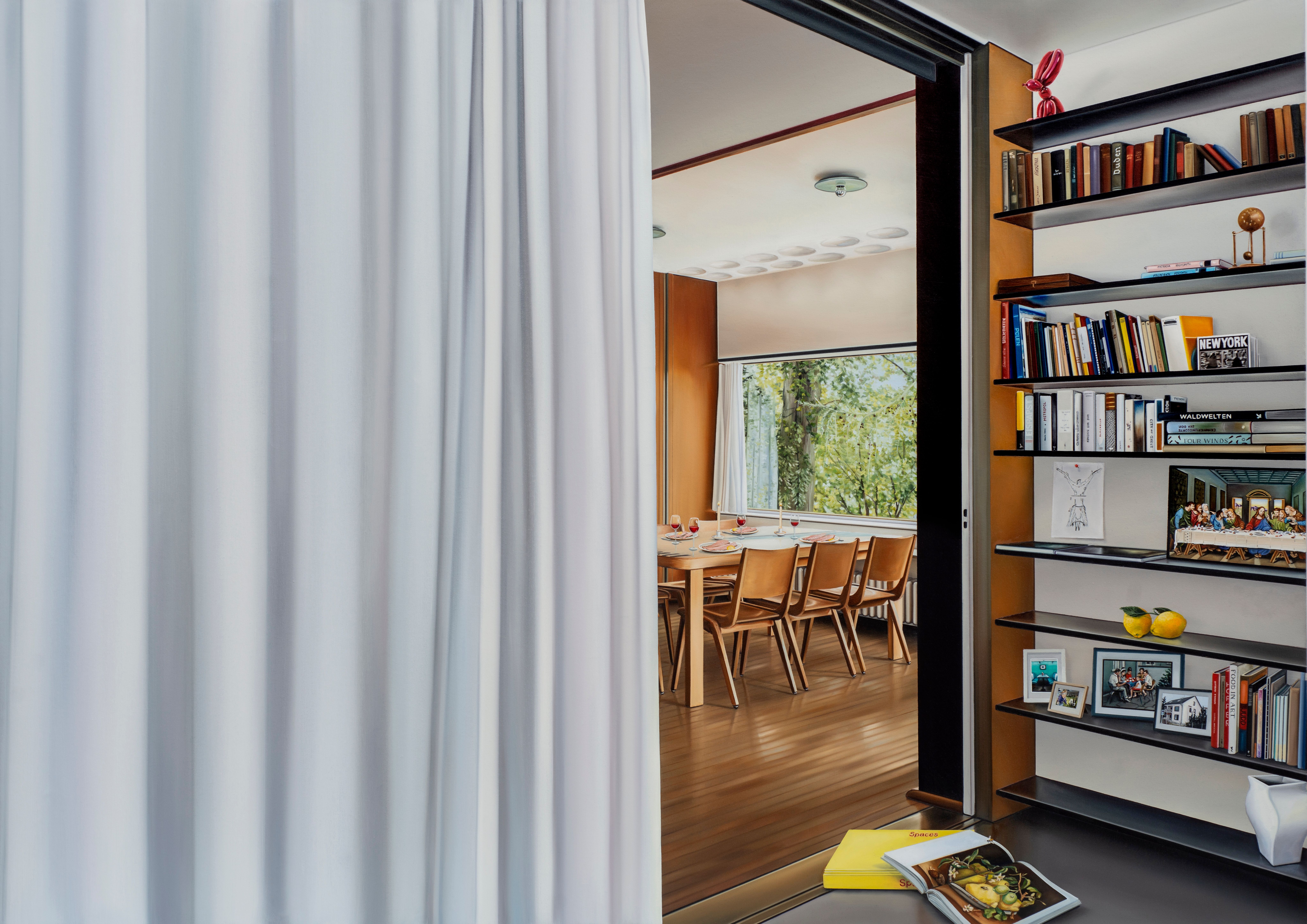
Haus Schminke is a giant game that, though it was once presumed to be lost, is brilliant and extraordinary. This is because its architect Professor Scharoun—affectionately known as “Pfeffer Huhuhun” by the house’s smallest inhabitants—based his entire design around the needs of children. He created slides from banisters, built hatches for climbing out of and had colourful peepholes added to the glass doors so the children could discover the world in different colours. Grasmann plays the same game: she hides eggs in minced meat, wrestles with light and shadow, poses riddles, has Looney Tunes flickering on a screen and, as a final touch, attaches peepholes to the windows of the Fridman Gallery. The manufacturer’s house represents a utopia. It is conceived of as a better place that combines beauty with fun, functionality with a spirit of discovery and discipline with a loving togetherness.
The Grand Buffet celebrates this utopia at a time when little remains utopian and its last pillars are being flattened into the ground. As a result, the series itself becomes a space in which hope is still possible.
Text by Ann-Kathrin Ntokalou, originally published for the exhibition The Grand Buffet at Fridman Gallery, Beacon, New York, June 2022