House of the Spirits
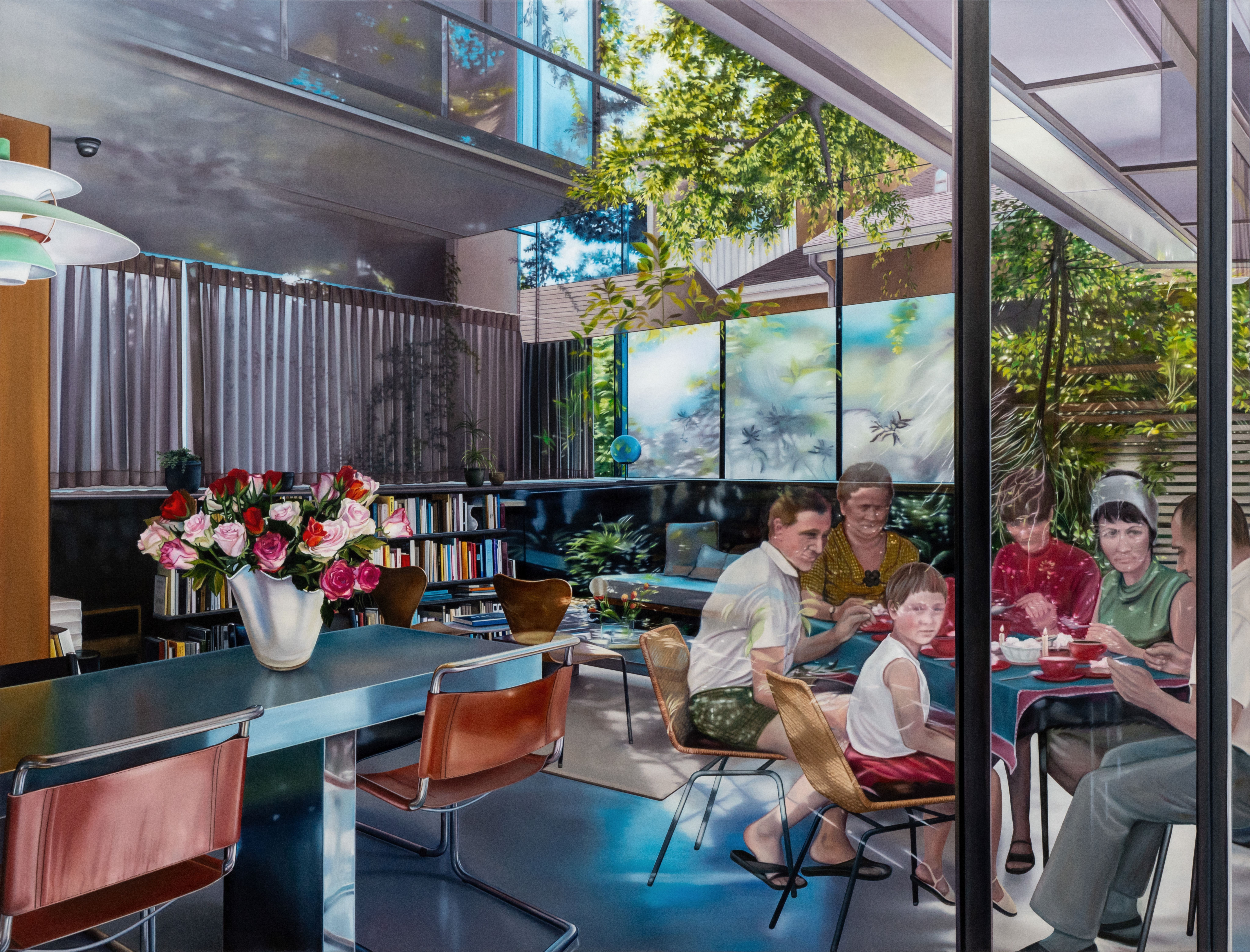
House of the Spirits takes as its point of departure a building by the Austrian-American architect Richard Neutra, a pioneer of the International Style, who designed it in 1932 as a radical “glass house” for himself and his family in Los Angeles. In March 1963, the house was largely destroyed by fire. Richard Neutra and his son Dion redesigned the main house together. The changes to the design prompted one critic to remark that the original clarity had disappeared, while the new house had gained a sudden visual complexity. This complexity also permeates Grasmann’s painterly interpretations of its interiors. She emphasizes the formal qualities of both the exterior and interior architecture without neglecting the building’s close integration with nature. Human figures then appear, distinguished by their degree of realistic presence from the clarity and rigor of the architectural structures with their luminous vistas.
This may partly stem from the challenge of painting people again after a long period, yet more significant is Grasmann’s decision to render these figures not as fully present, but rather as shadowy, almost ghostlike. This impression is reinforced by the fact that they are visible only indirectly—through reflections, in the background, or beyond the rooms themselves. The figures appear like interferences in space and time, subtly transforming the architectural views. These superimpositions arise from the artist’s concrete as well as associative work of remembrance.
Grasmann was inspired by the traces left behind by the people who once lived in the house. She was particularly fascinated by the fragmentarily preserved library, containing personal inscriptions in German. These books bear witness to a former living environment and form a bridge between Neutra’s homeland in Austria and the new world he entered after emigrating to the United States in 1923. Grasmann quotes titles from this library in the titles of her paintings.
The theme of memory became especially significant through Grasmann’s engagement with photographs from the estate of her grandfather, who passed away two years earlier. “As Alzheimer’s disease progressed, all periods of time began to merge in his perception, while the present gradually faded away.” (A.G.) His wife appears repeatedly in these photographs. Likewise, Alina Grasmann’s grandmother appears throughout the paintings presented here. Although this was never the artist’s original intention, these works have also become an extraordinary portrait of her grandmother. This homage reveals the extent to which the stage of the Neutra House is inhabited by subjective manifestations of memory.
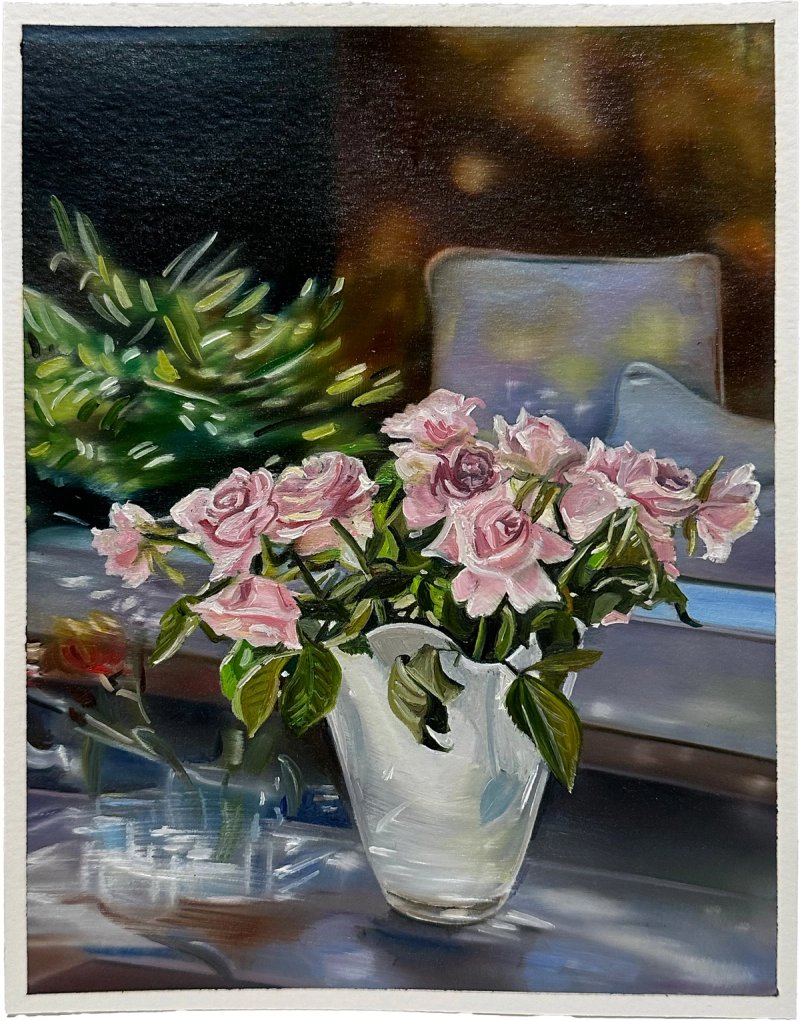
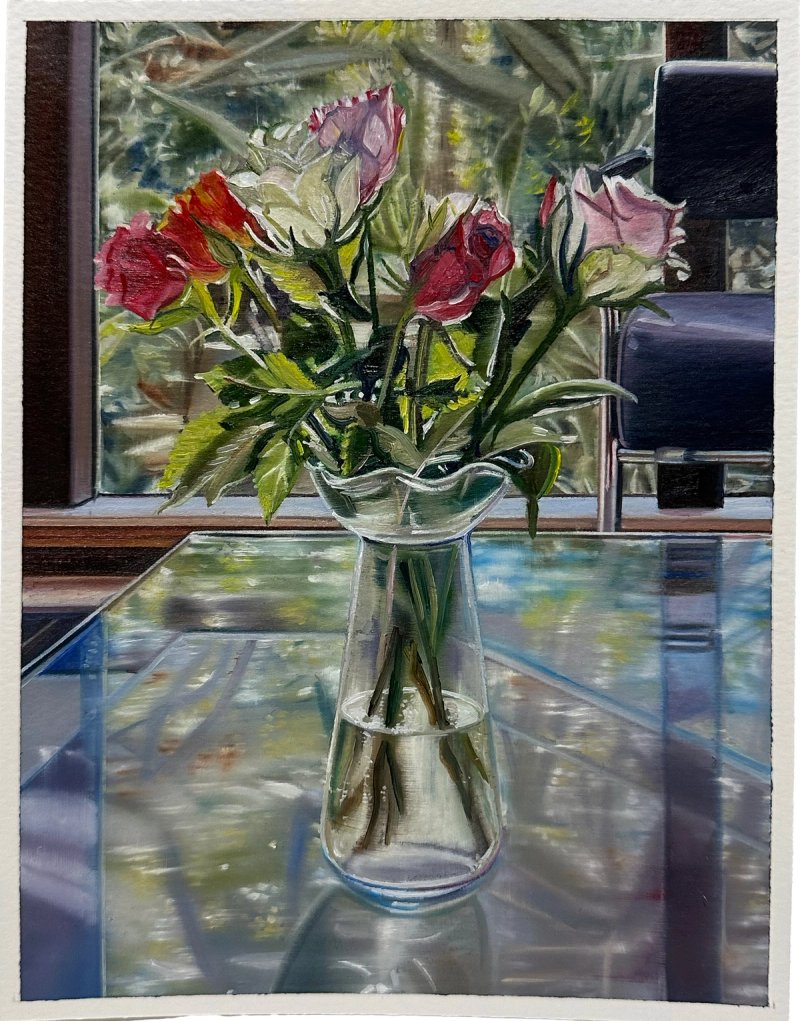
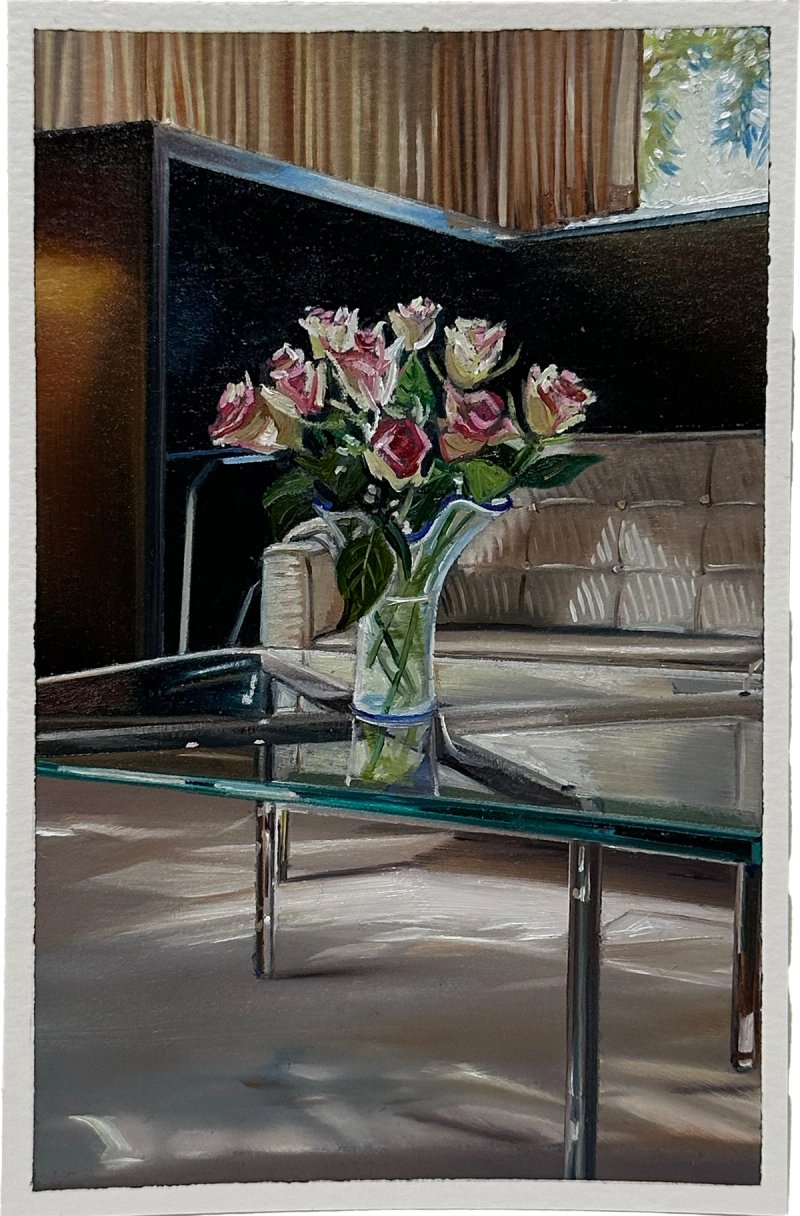
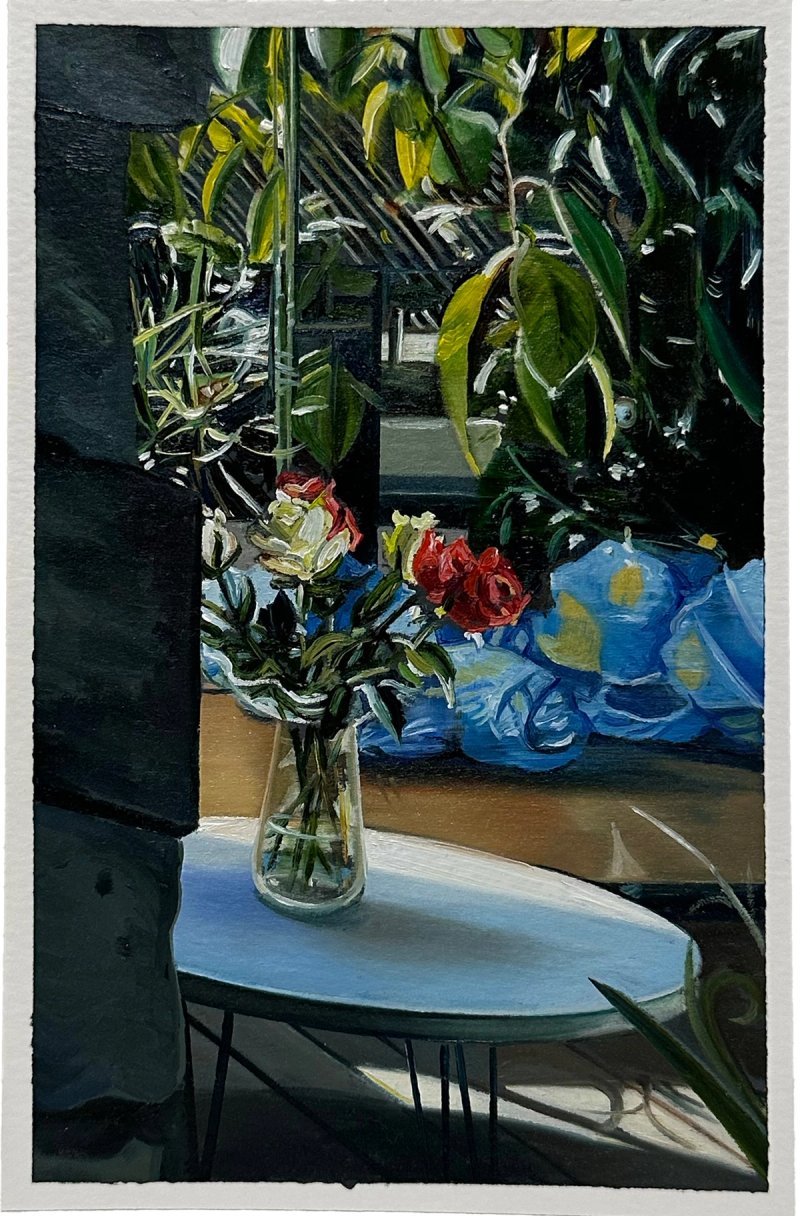
Another example is the recurring motif of roses, which serve as points of anchorage for Grasmann: “a symbolic bond to the past, a reflection on home, but also on the search for a new one. The roses represent a connection between past and present, a trace of memory unfolding throughout the rooms.”
Grasmann’s series vividly demonstrates how the austere spaces of a modernist house in California can become a stage and backdrop for the emotional dynamics and complex mechanisms of memory and its particular visualization. The visual correspondences and biographical overlays of two family histories sustain the tension within the compositions. They remain moments of productive disruption that keep our gaze in motion and repeatedly invite reflection, entirely in keeping with the artist’s intention. For Grasmann, memories are like ghosts: “They are omnipresent, often only vaguely perceptible. They accompany us, appear in dreams, intertwine with our thoughts, and leave traces.” As Alina Grasmann further explains: “Memory helps me explore my own identity, understand my relationship to time, and find my place within it. In my series, the house becomes a site of simultaneity where past, present, and future merge.”
Extracts from the introductory lecture by Dr. Achim Sommer for the exhibition Der Planet auf dem Tisch at Brühler Kunstverein (2 May 2025), editorially abridged for this publication. The full introductory lecture is available on the Brühler Kunstverein website: https://bruehler-kunstverein.de/ausstellung/test/
 with love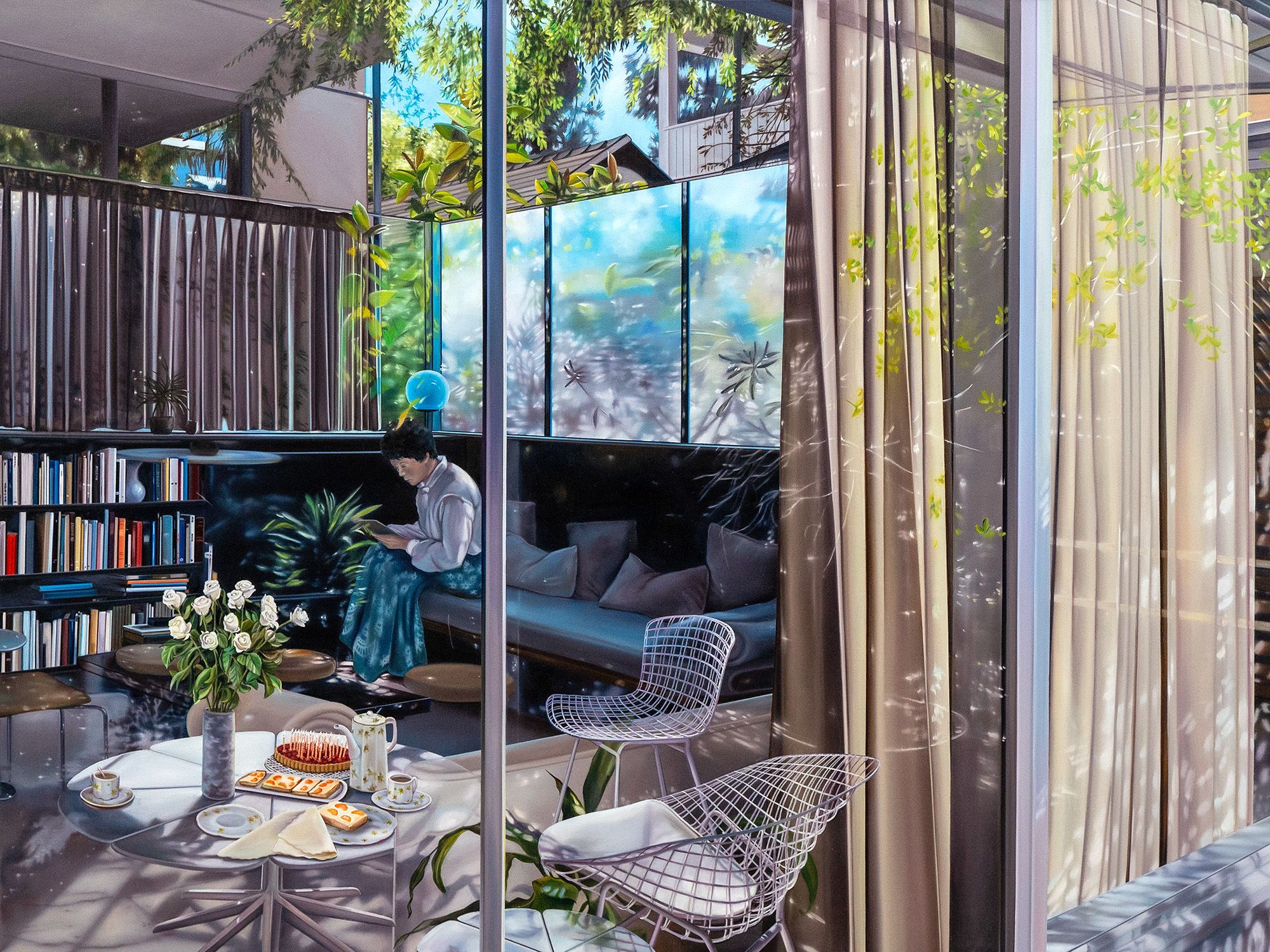
 our sincerest thanks for sharing your lovely, innovative home with us
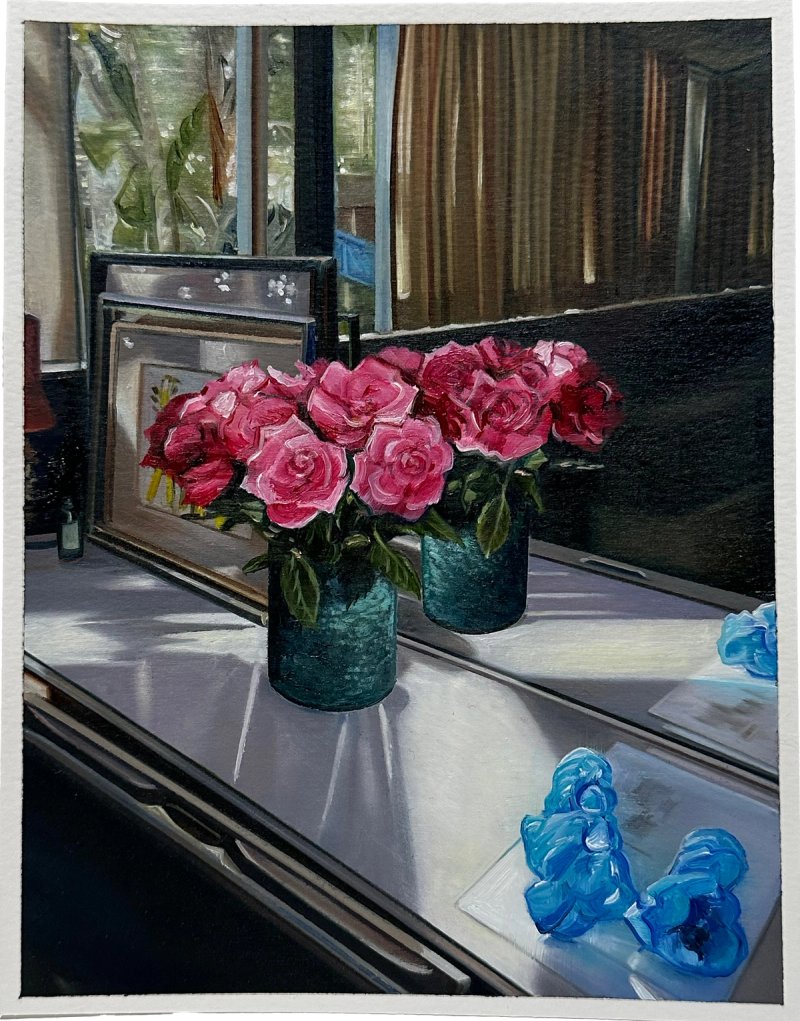 for my treasured friend with admiration and abiding affection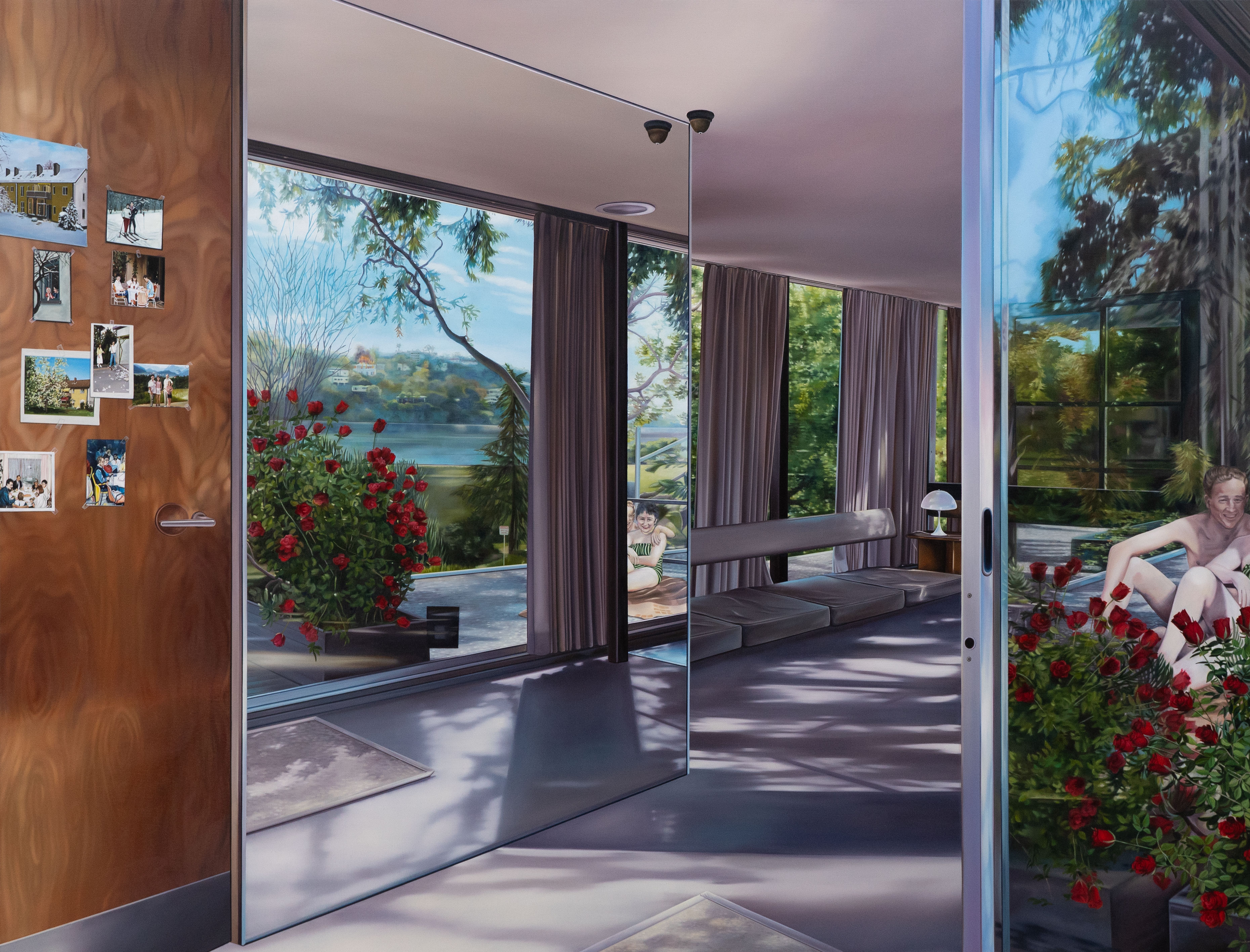
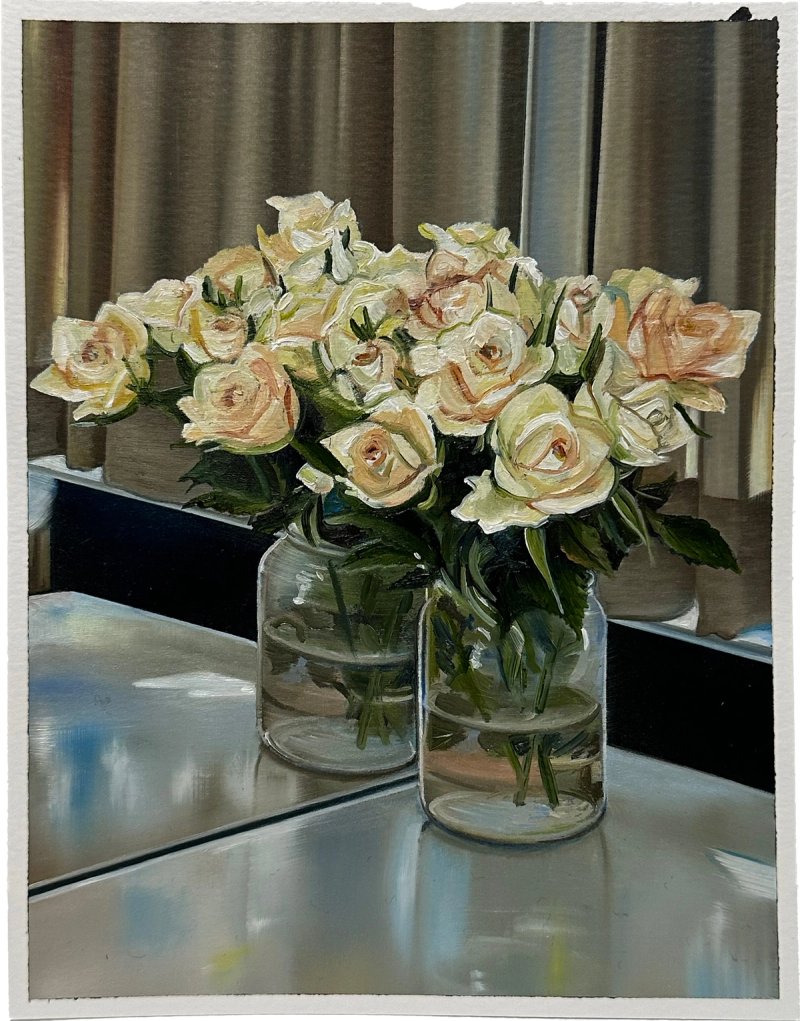 an introduction to a favorite friend --
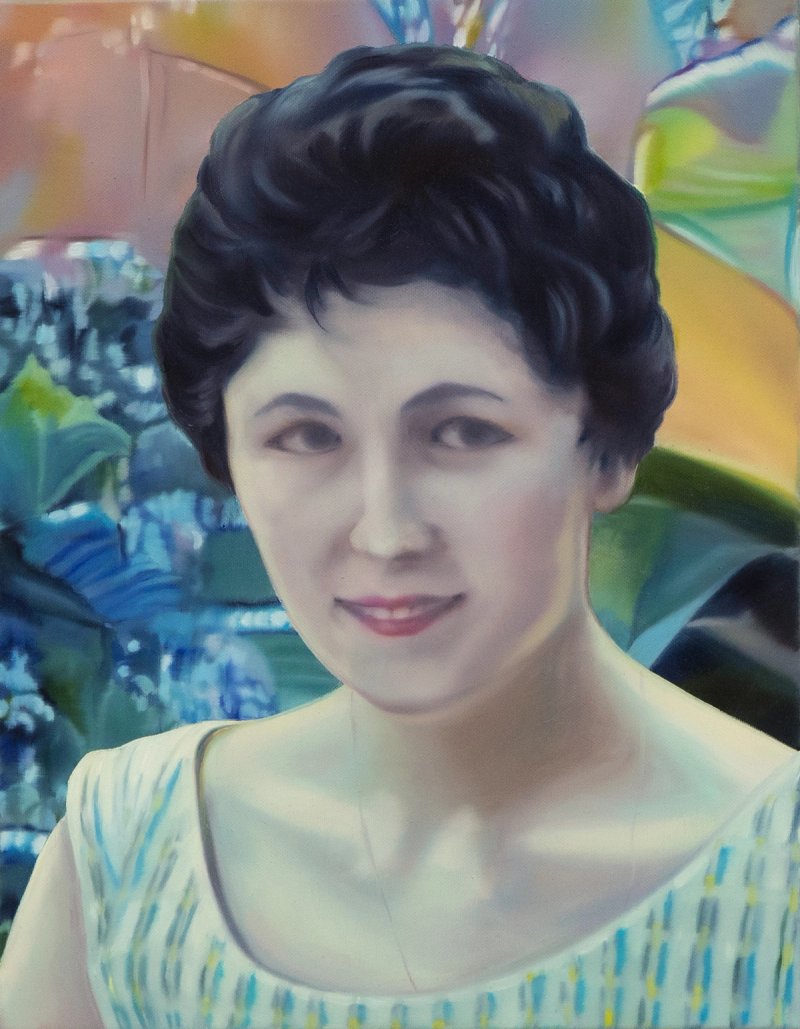 spirit 1, 2025, oil on canvas, 45 x 35 cm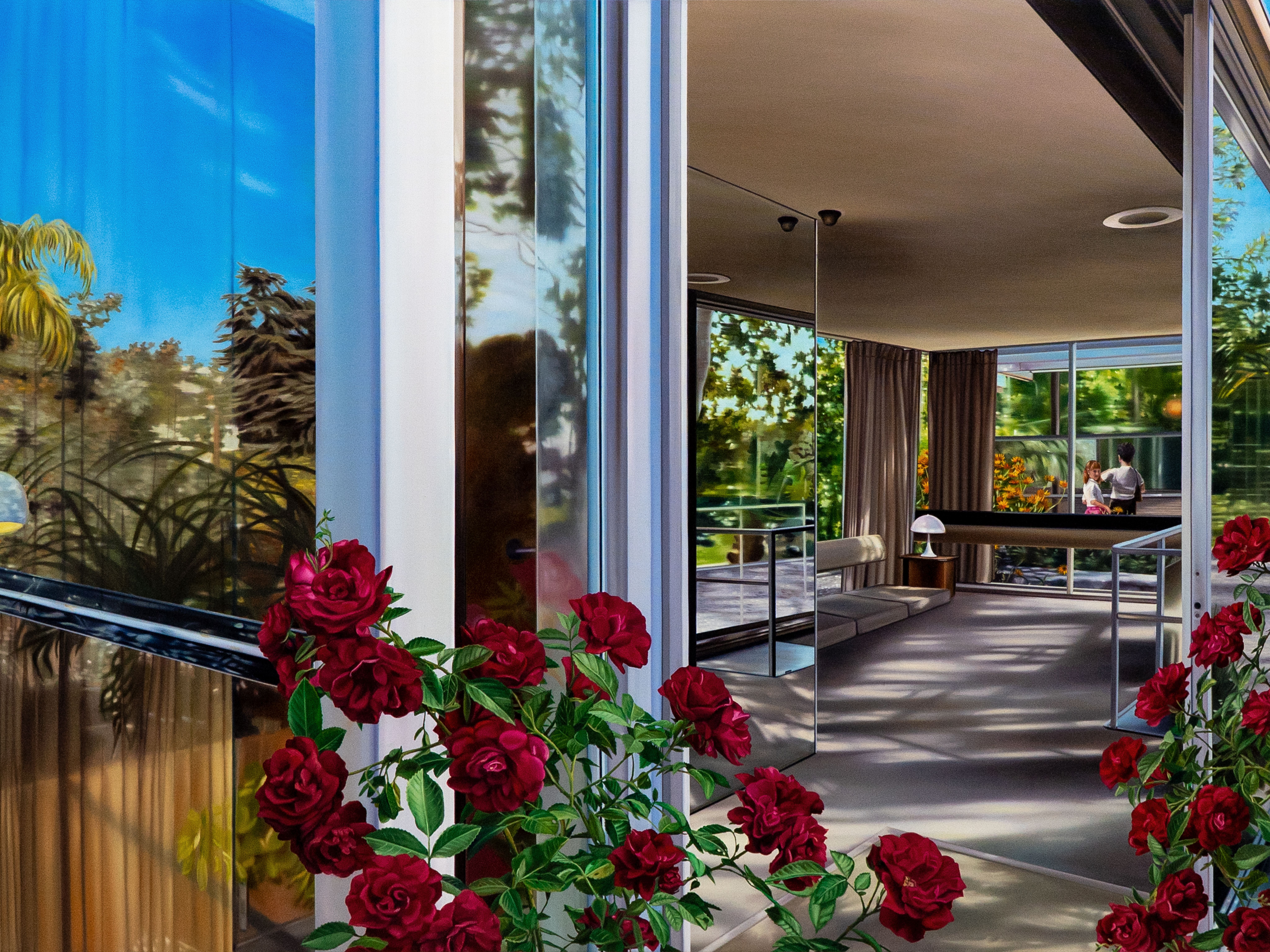
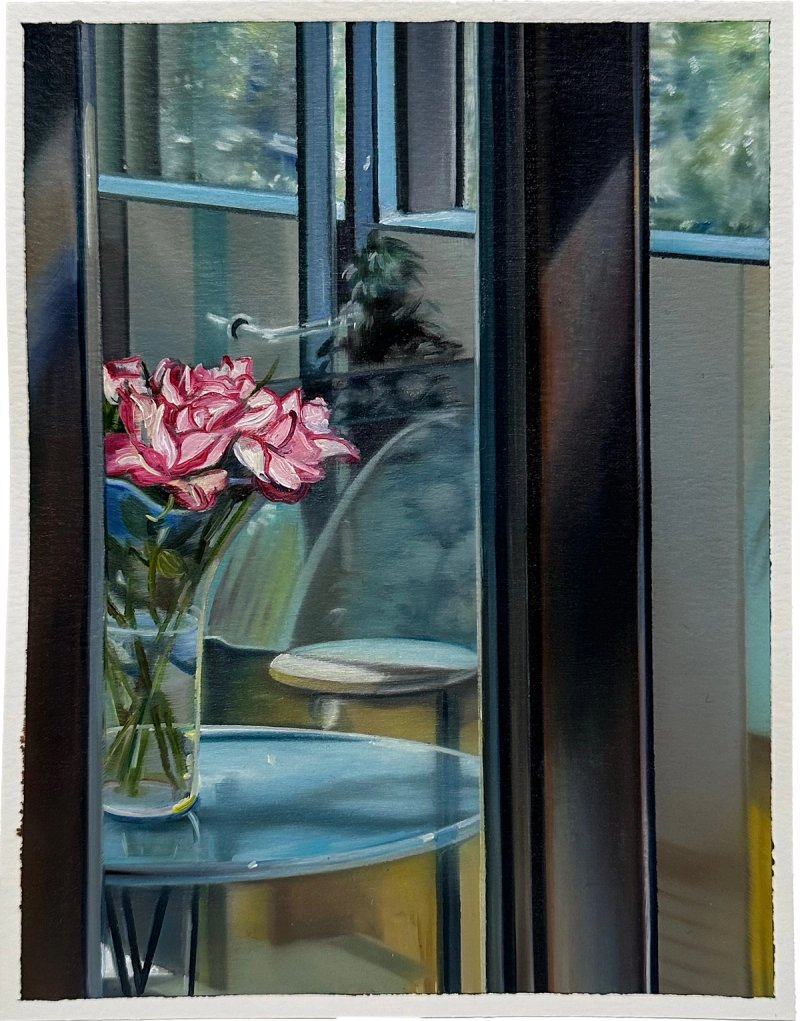 Eingedenk guter Nachbarschaft
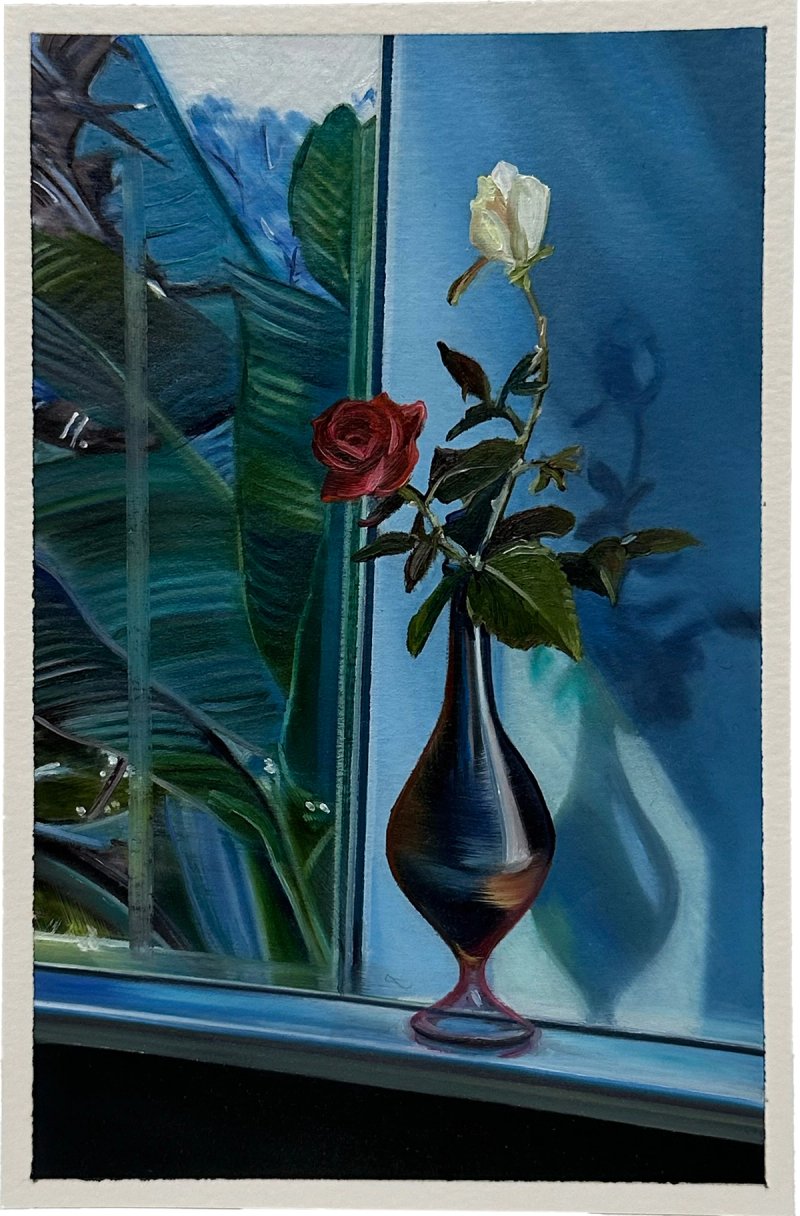 in appreciation of the evenings of music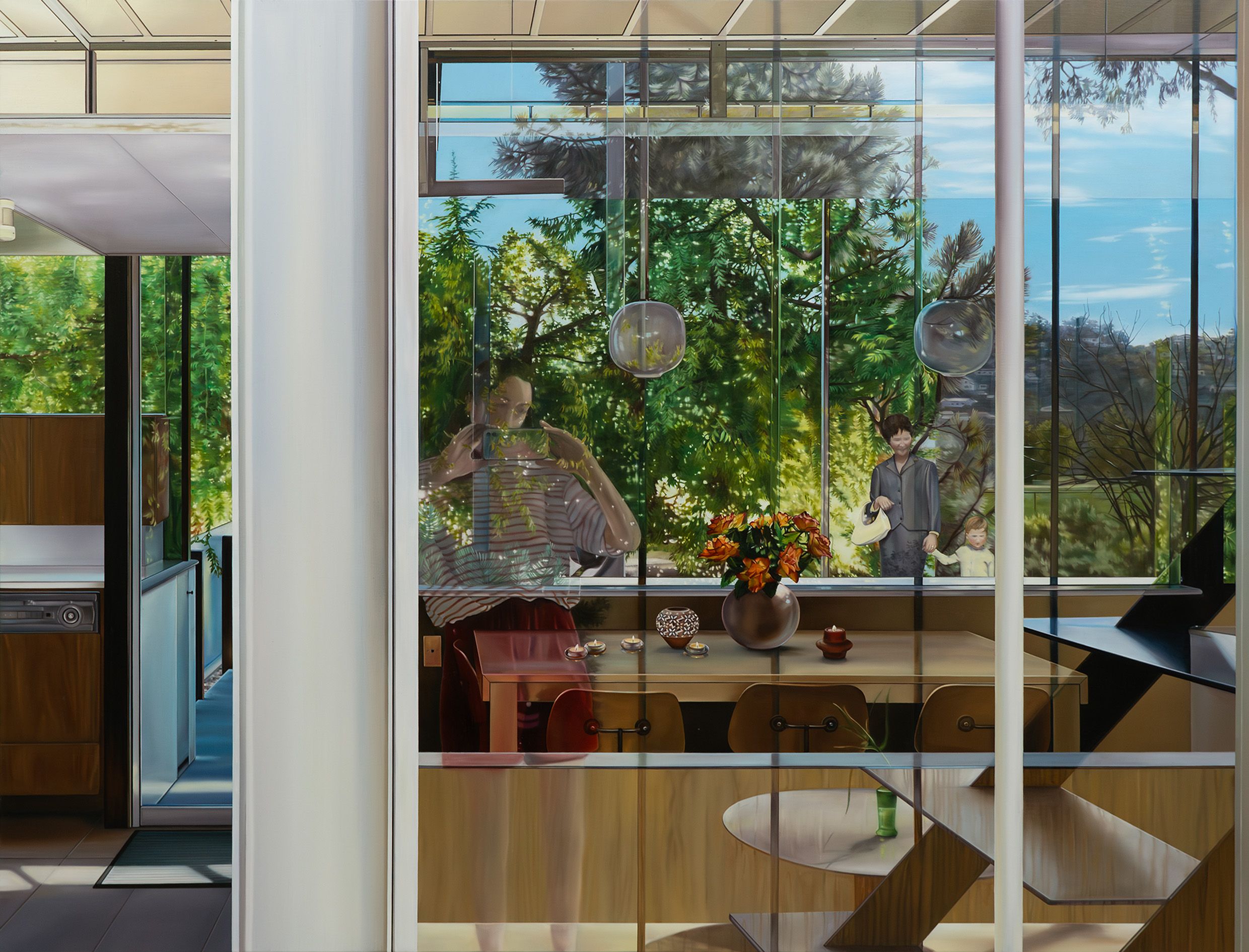
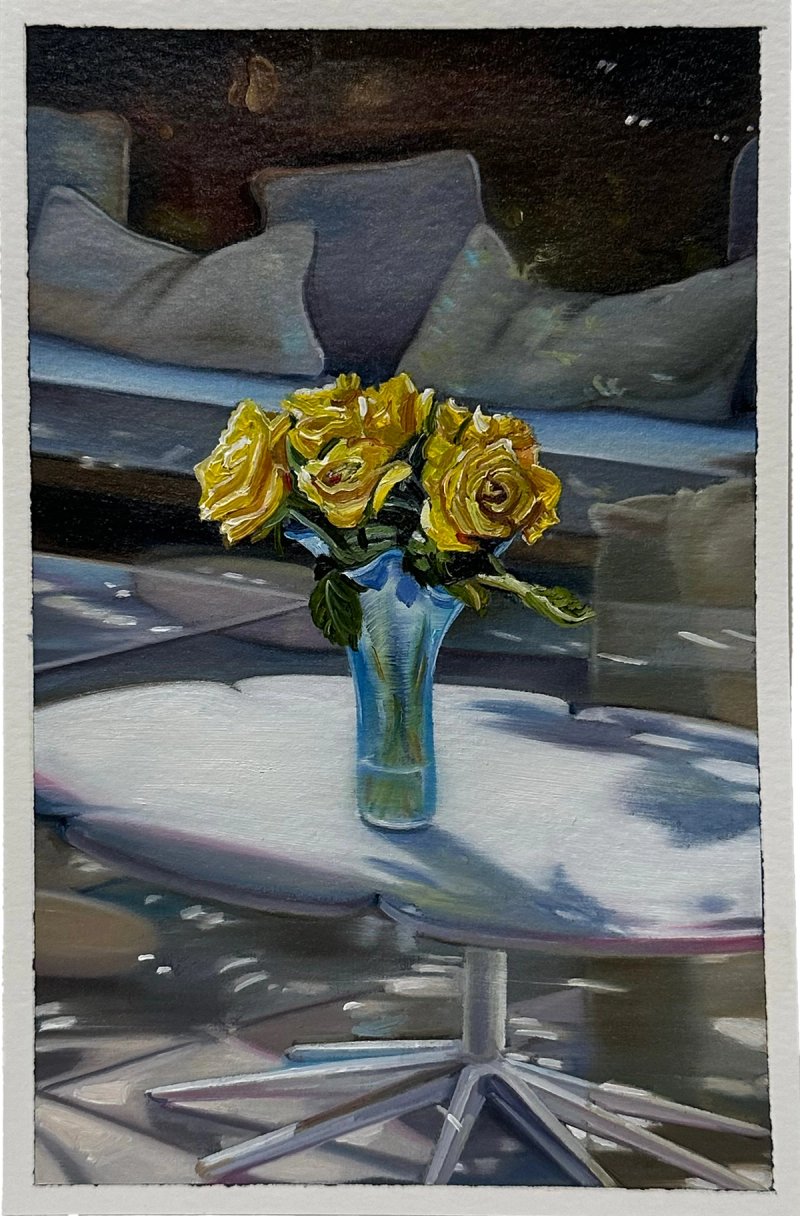 ein naher Geist
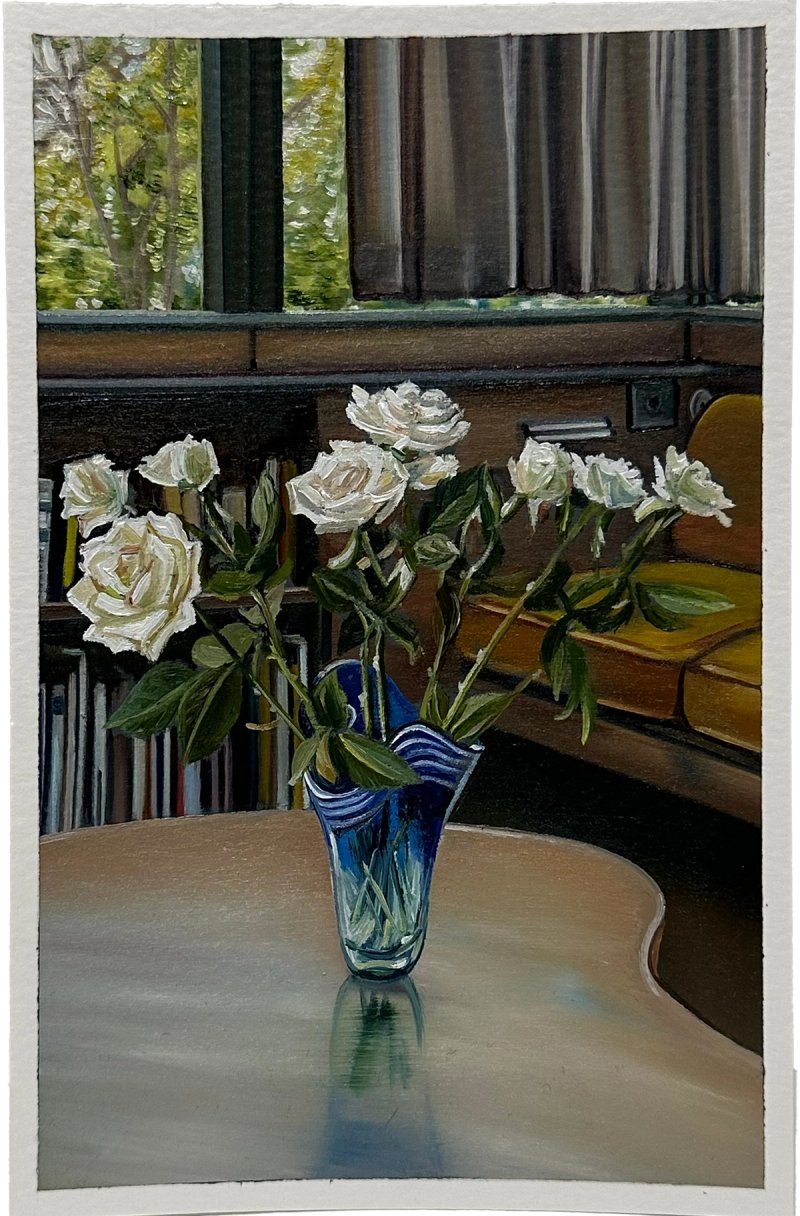 In Dankbarkeit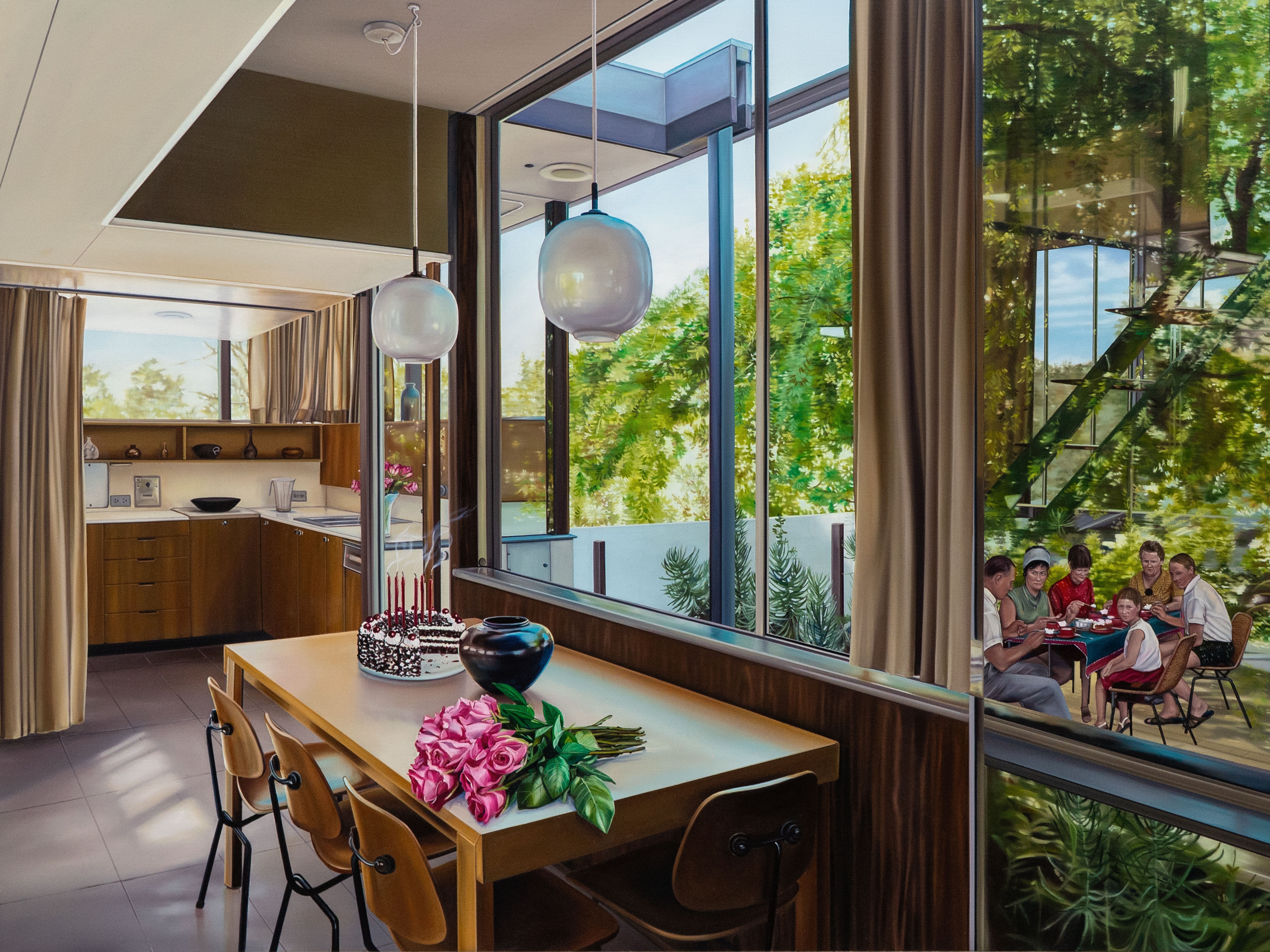
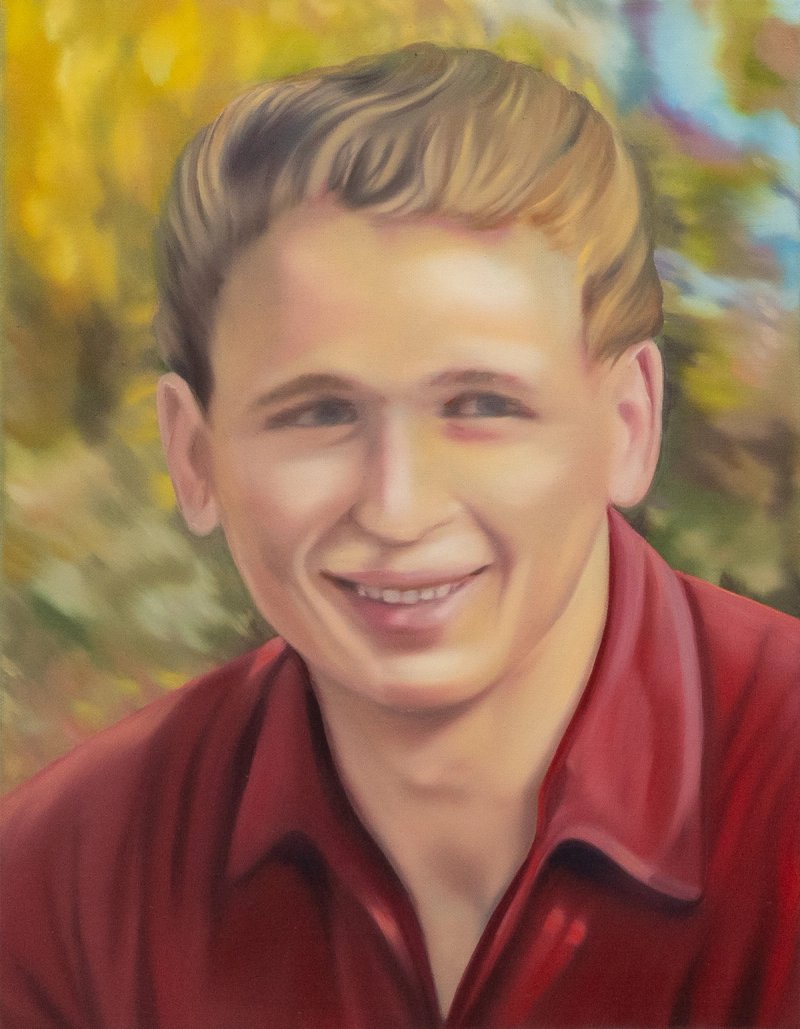 spirit 2, 2025, oil on canvas, 45 x 35 cm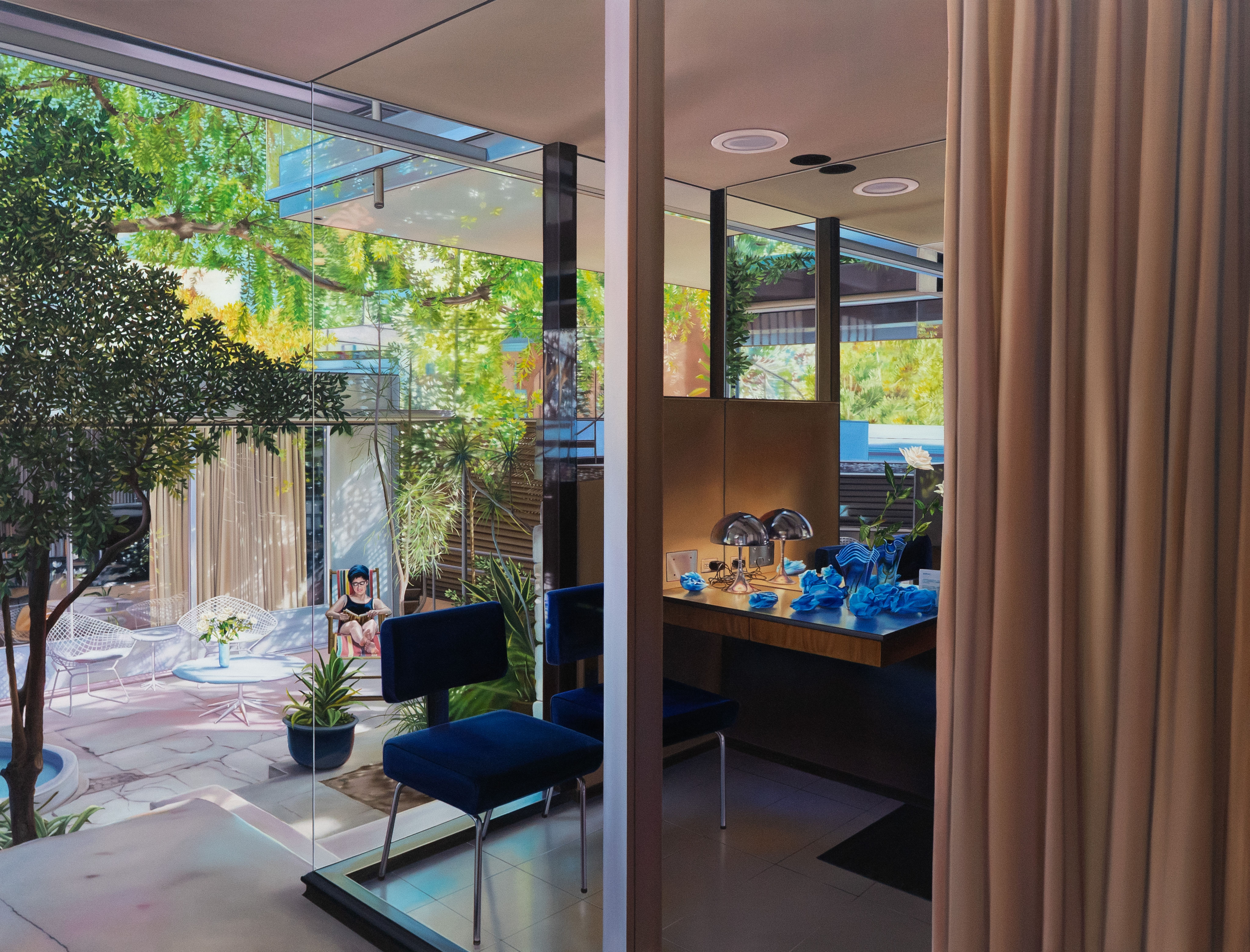
 with our best wishes and high esteem
 Happy Birthday and many more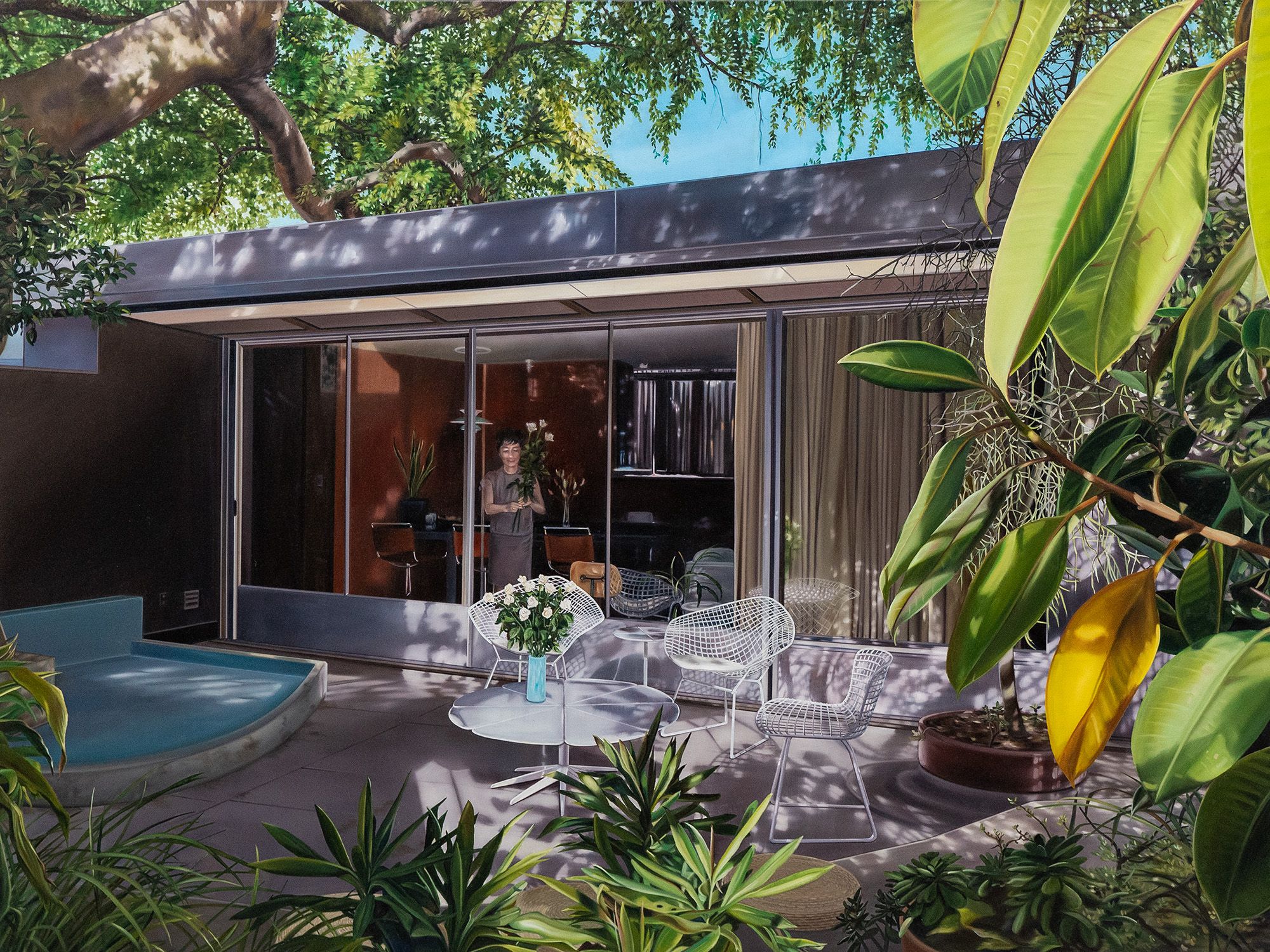
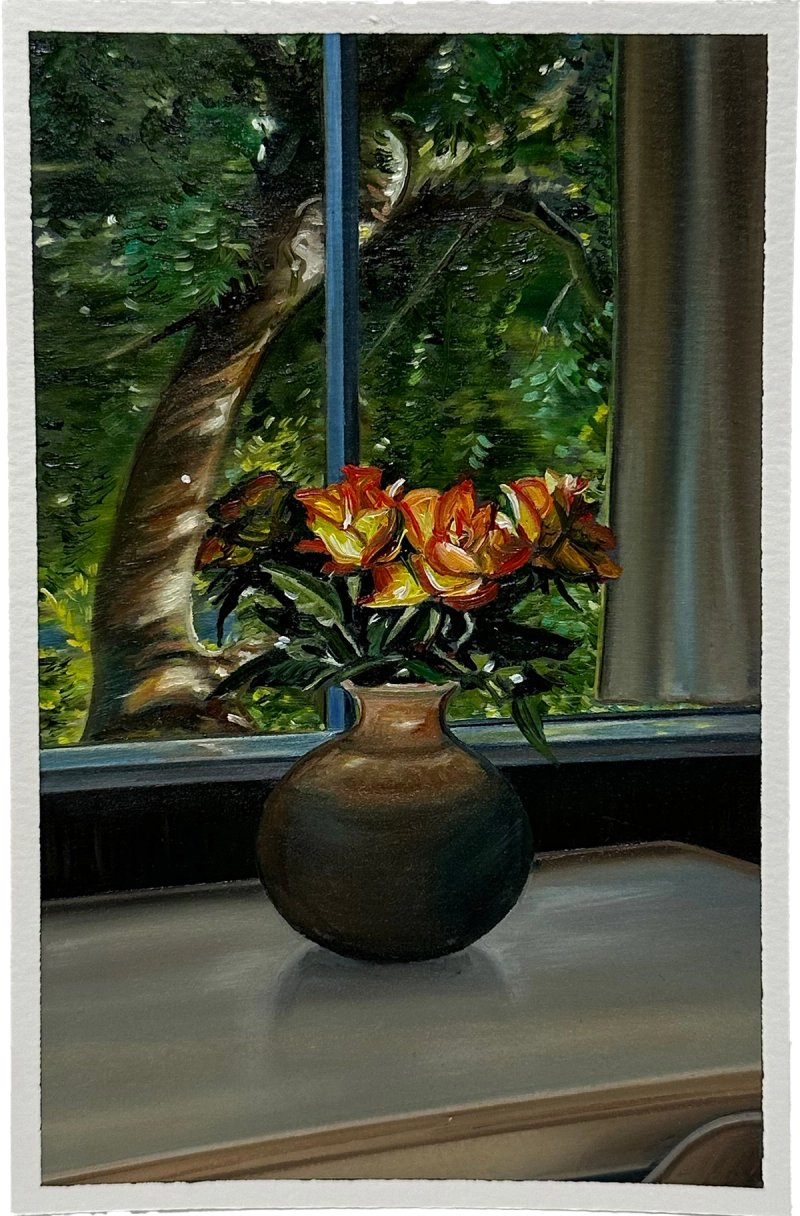 with fond memories
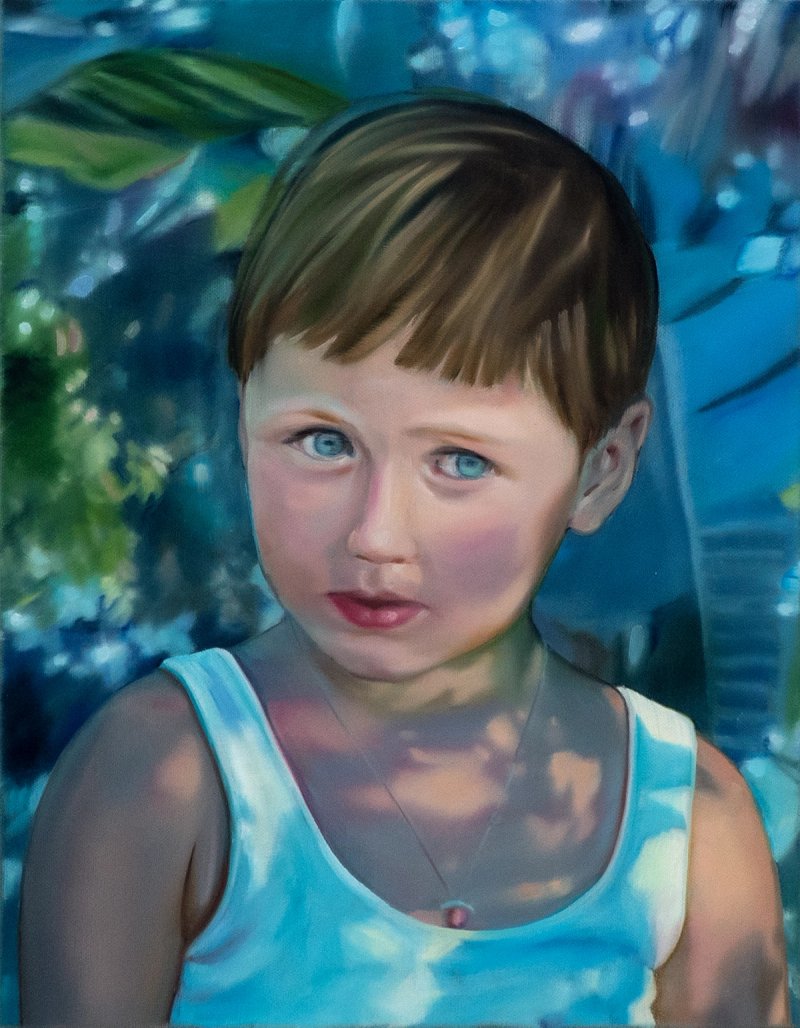 spirit 3, 2025, oil on canvas, 45 x 35 cm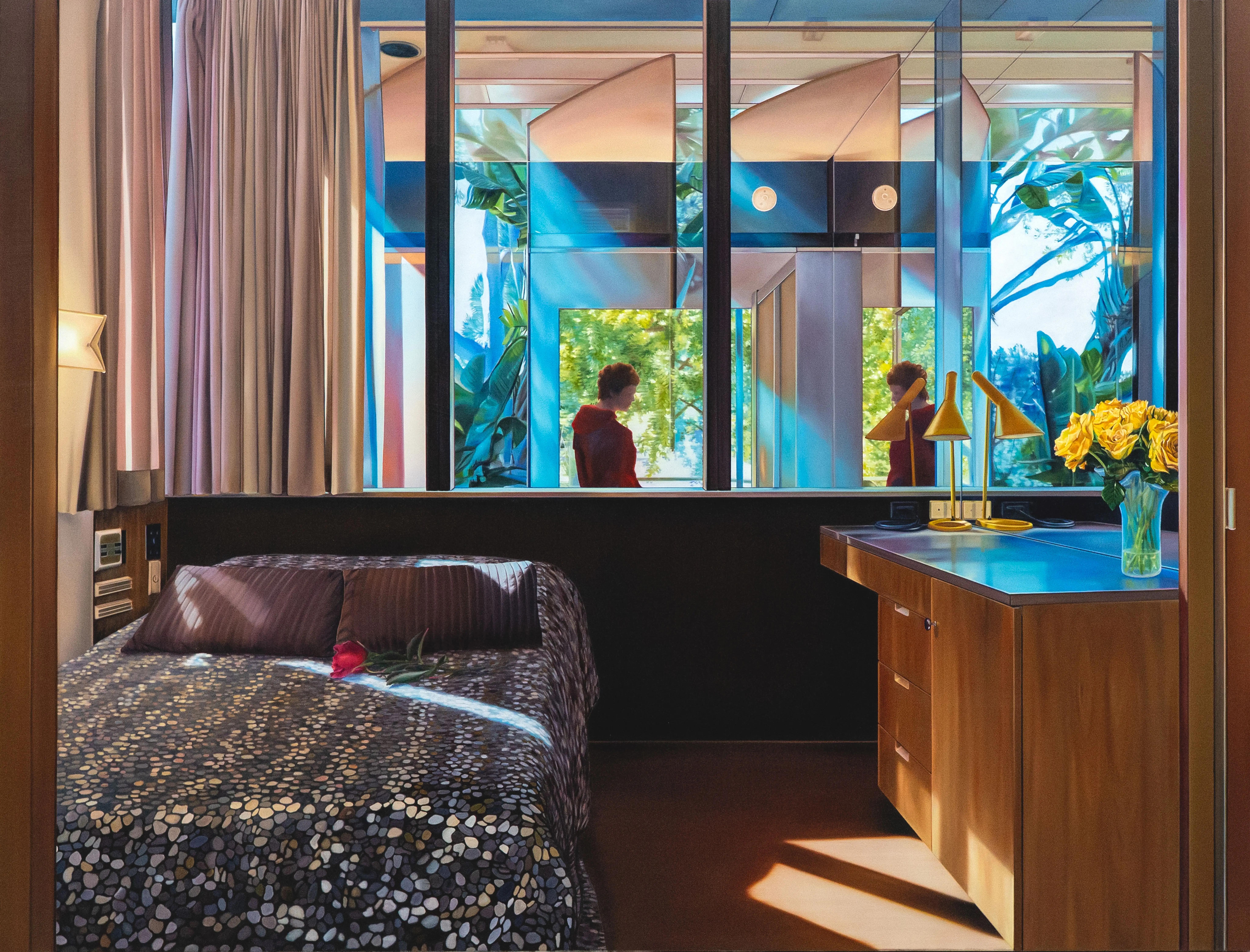
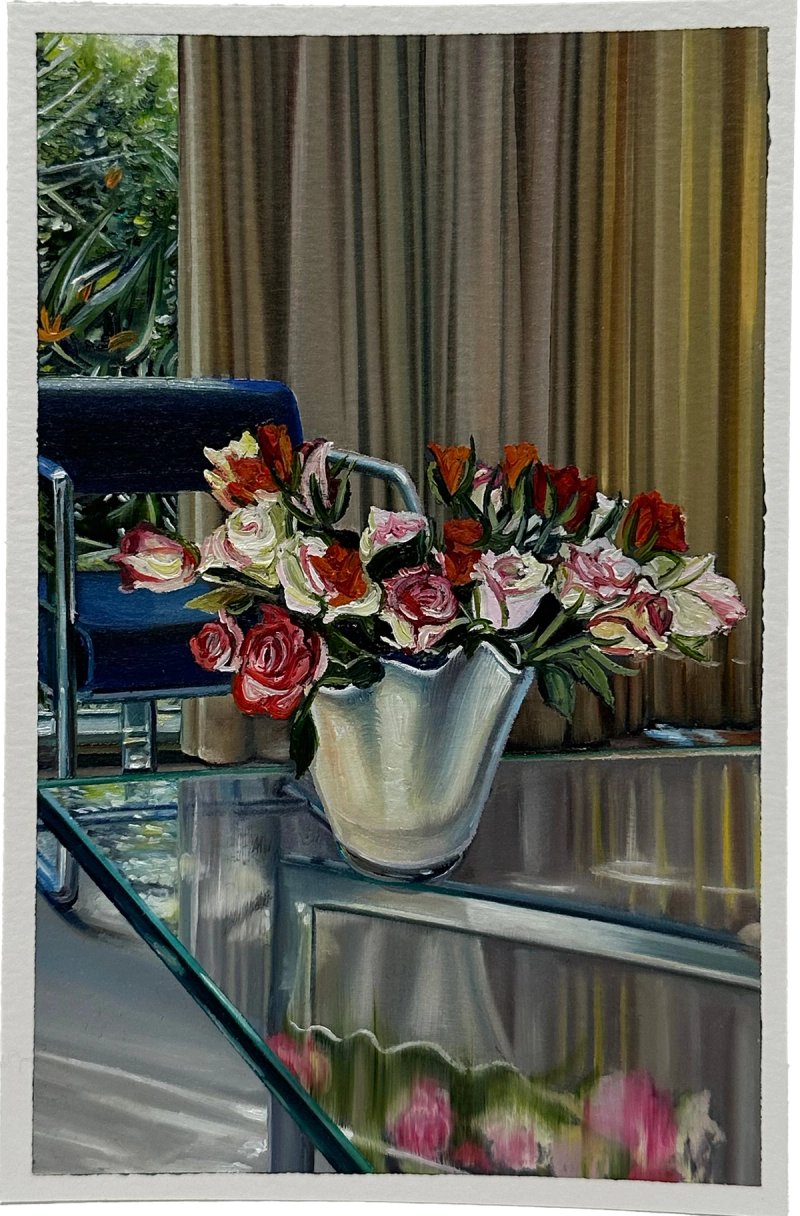 Herzlichen Dank für die schönen Stunden! Zur Erinnerung
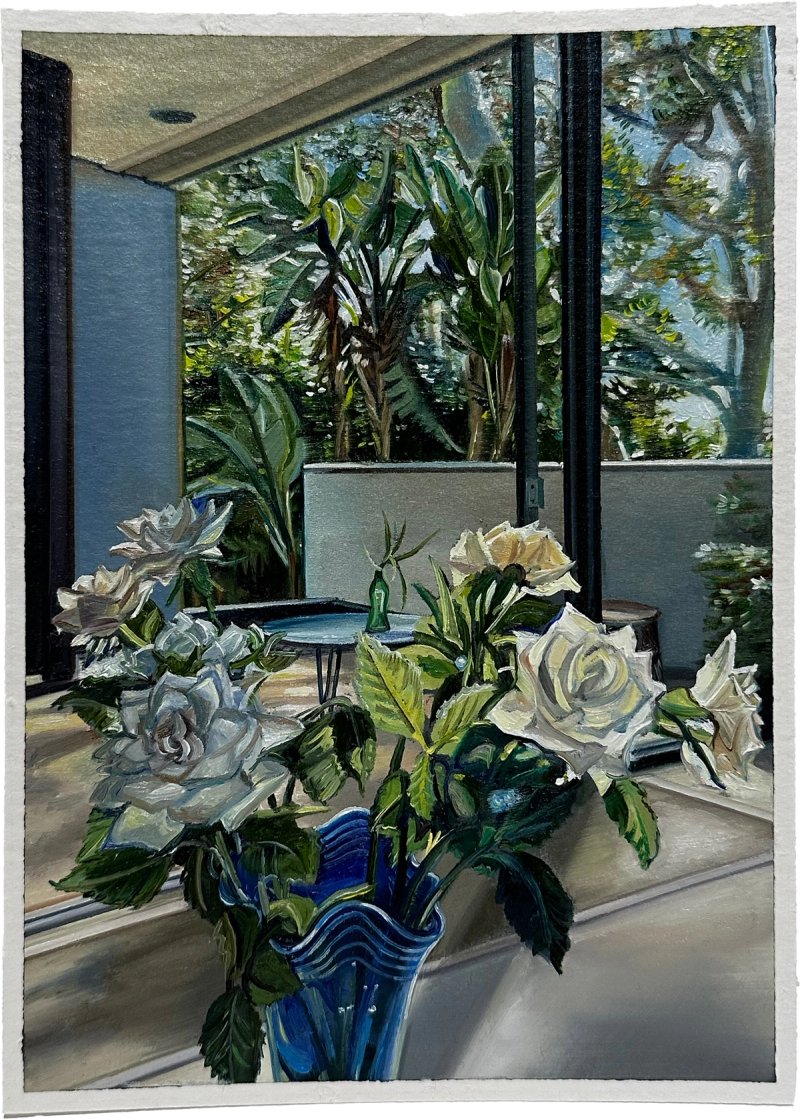 an invitation to dwell in fairy land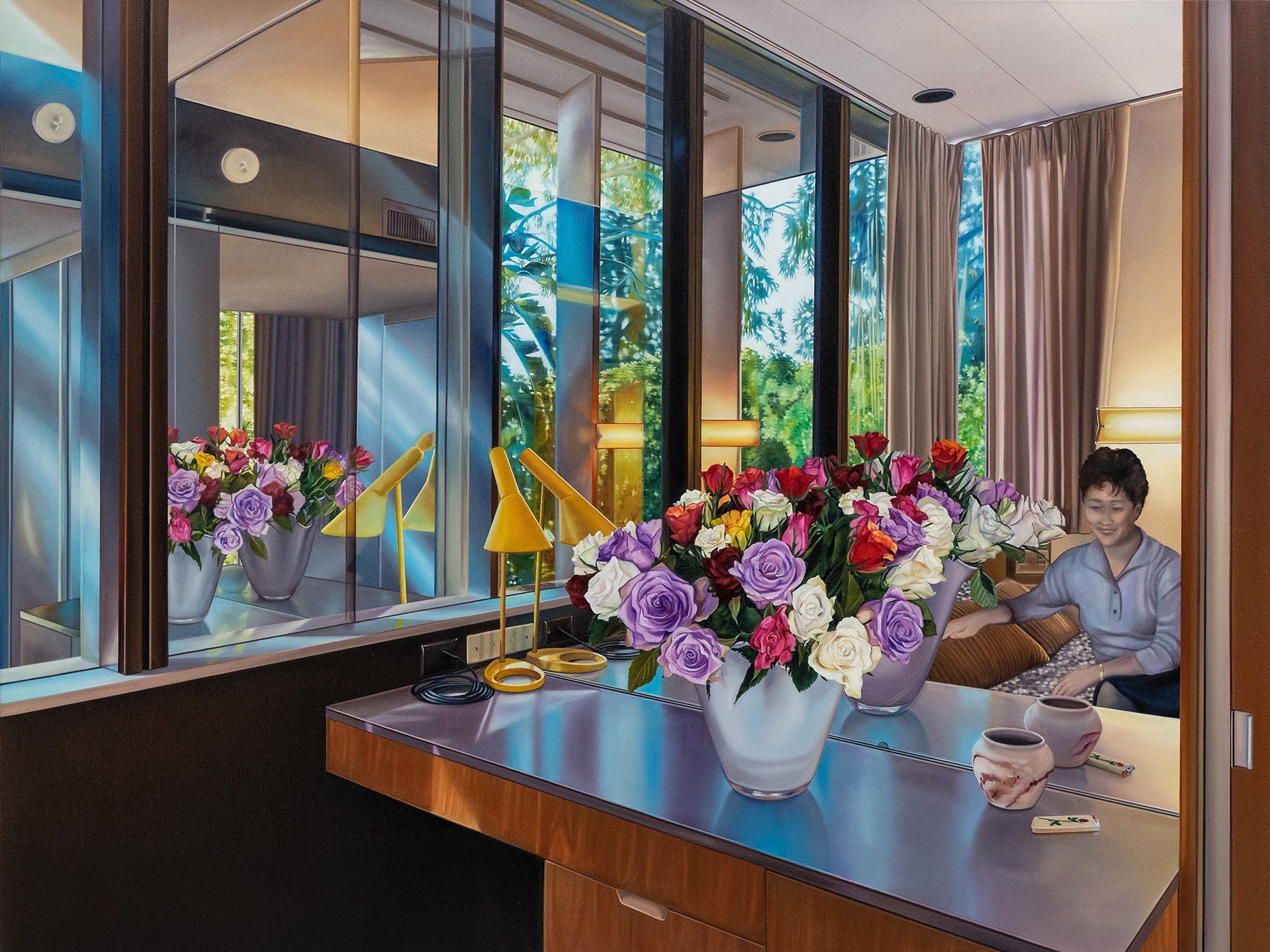
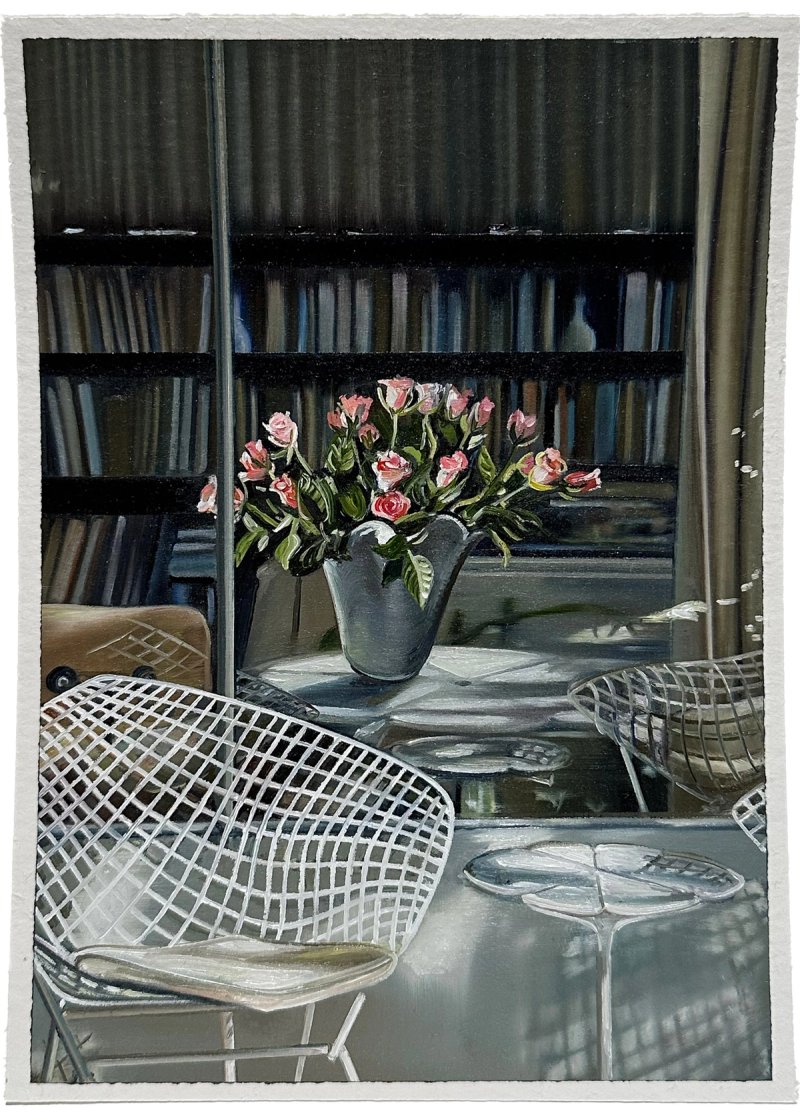 Für alle Freude ewigen Dank!
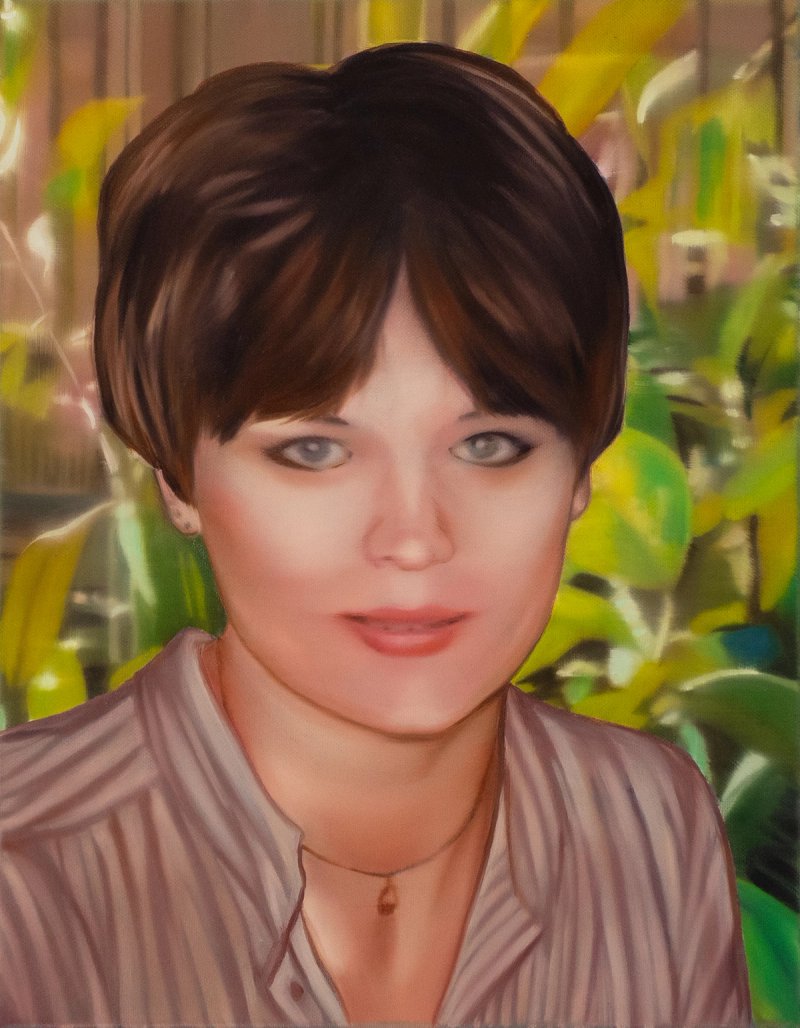 spirit 4, 2025, oil on canvas, 45 x 35 cm